





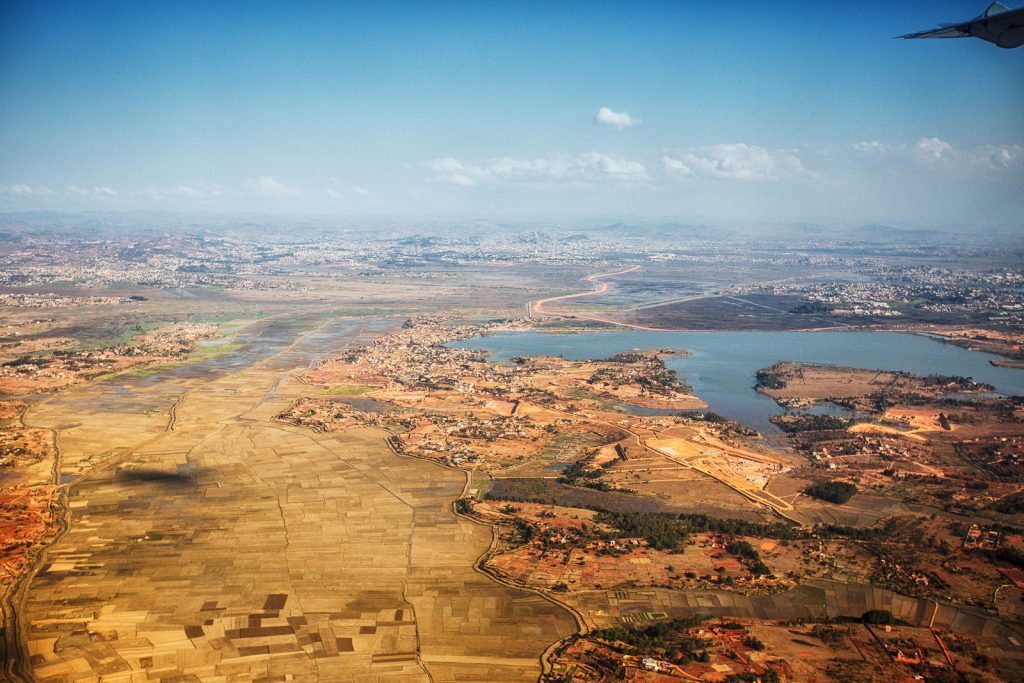



Arriving late into Antananarivo International Airport, it feels more like a livestock auction than the international airports you’re used to encountering anywhere else in the world. It’s chaotic.
Antananarivo — aka “Tana” — is the capital city. We see nothing but darkness. The bustle of Madagascar city life, its city lights, headlights and tail lights illuminating the street stalls and masses of people going about their daily routine.
We jet off in the morning, again in darkness. Another flight, destination Toliara — the southernmost major city of Madagascar.
We are three boys from Sydney travelling together for the first time, years apart — 21, 39 and 41 — yet with so much in common. We disembark our final plane ride and are tucked into a 1970s vintage French Passat hatchback, our boards piled high, barely strapped to the roof, bags and camera gear spilling out the back.
The very first thing that hits me is how laid-back Toliara is — a coastal town with sandy roads and the remnants of the old colonial French days everywhere. My mind plays games as I begin to imagine what it must have been like in days gone by.
Immediately we’re at ease; time has slowed instantly. Signs are everywhere — “Tonga Soa”, meaning “Welcome” in Malagasy. It sure feels that way.
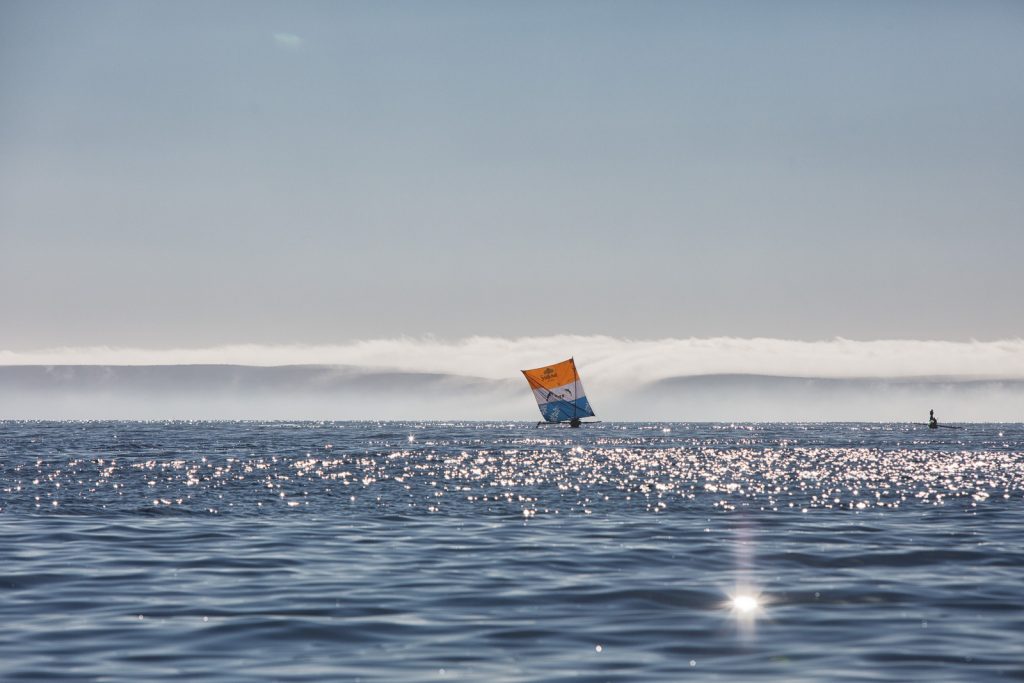
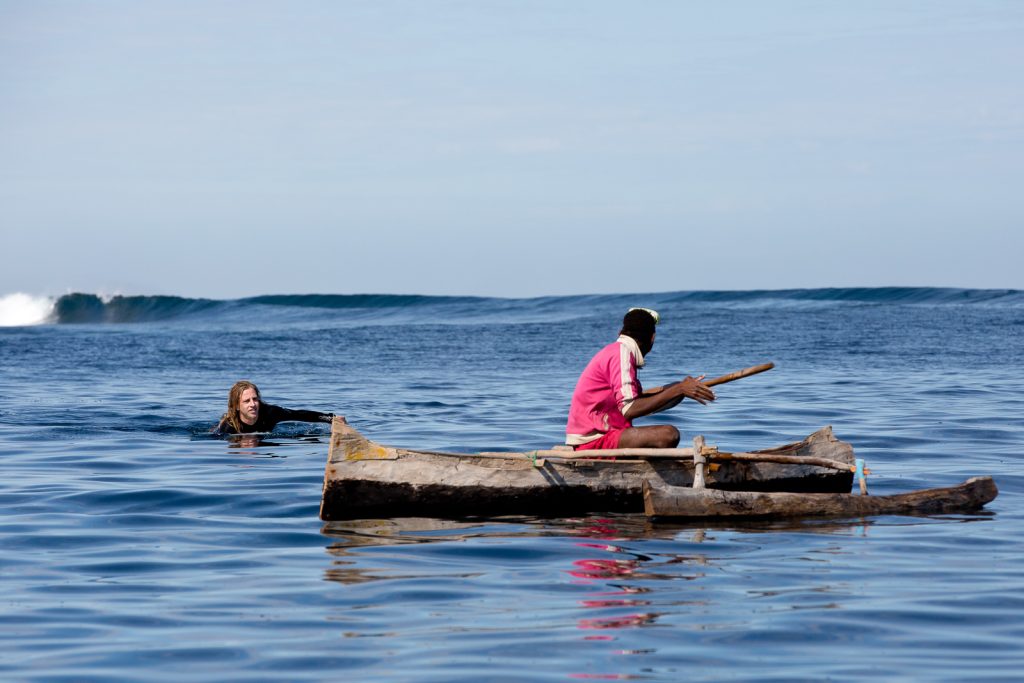
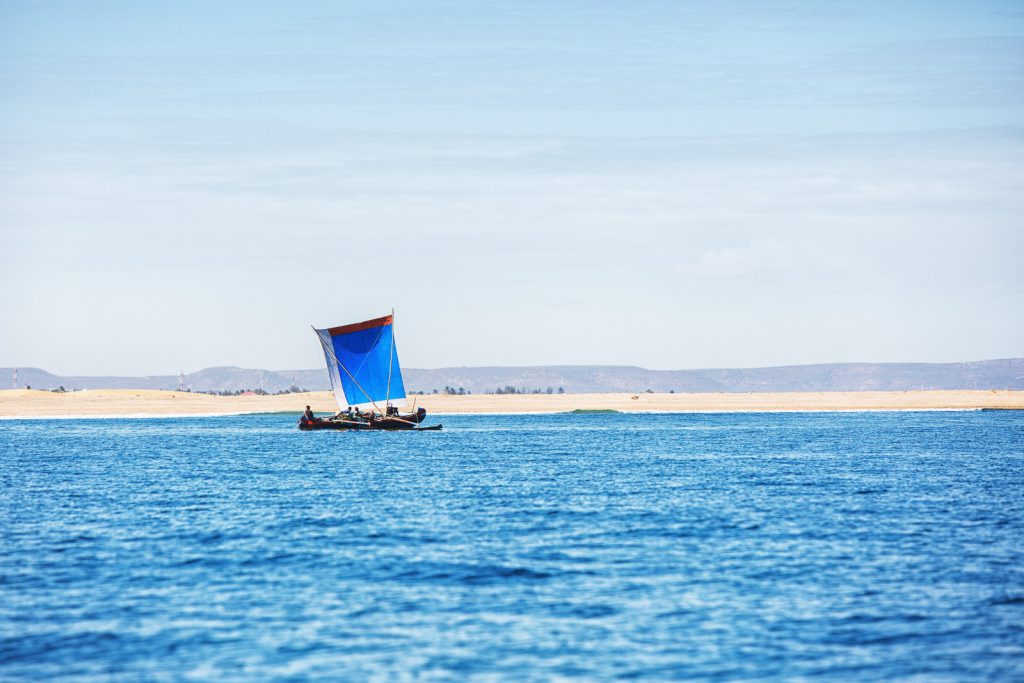
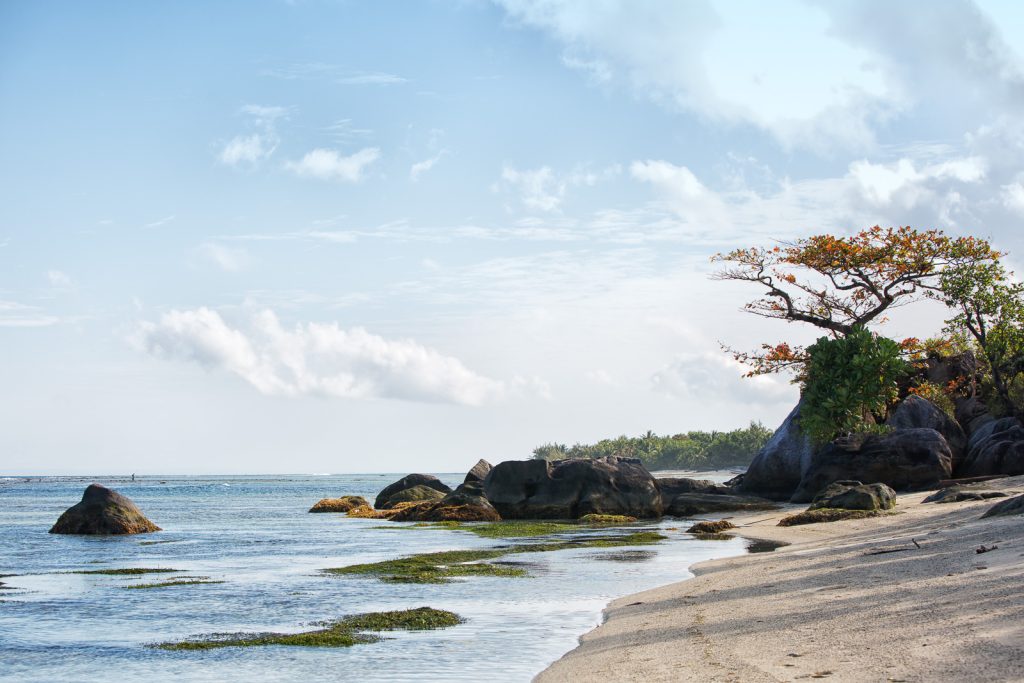
The local mode of transport for our coastal adventure: a boat, a pirogue — a dugout made from a baobab tree — fitted with a small 15 cc outboard and a sail patched from rice bags. The perfect example of repurposed waste. This is our transport as we traverse long empty beaches, reefs and amazing landscapes in search of empty waves to enjoy for hours on end. The next 10 days are solely set aside for surfing.
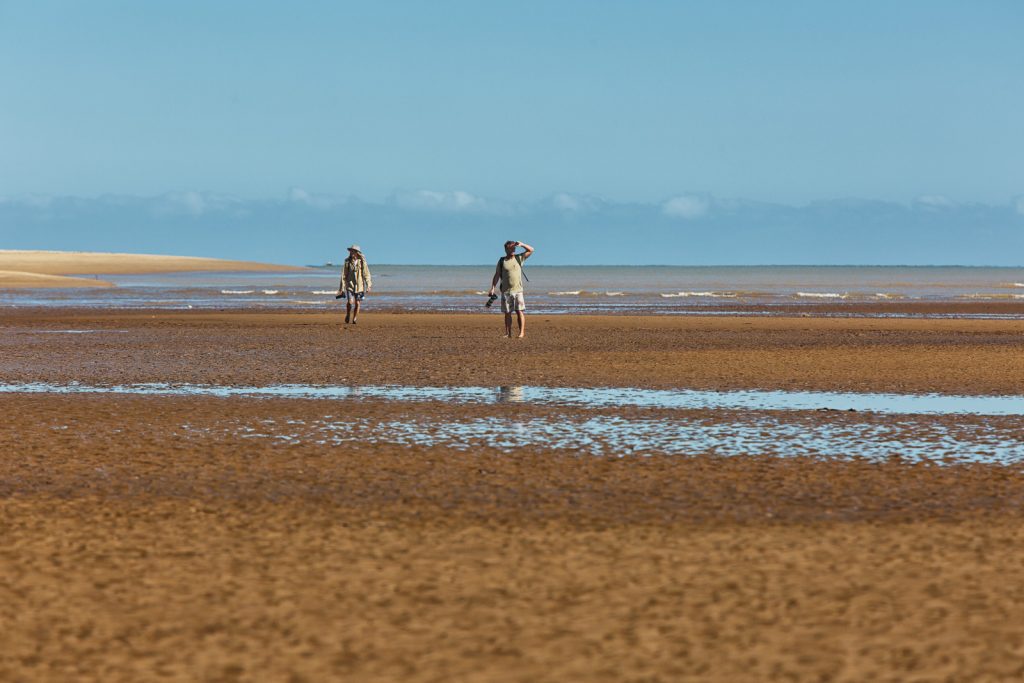
With approximately 3,500 km of coastline we explore just 130 km, from Mangily to Anakao. We hear stories, we make notes, evenings spent enjoying the local “Three Horses Beer” and pondering where to go tomorrow — and what we’d do next time with a bigger boat…
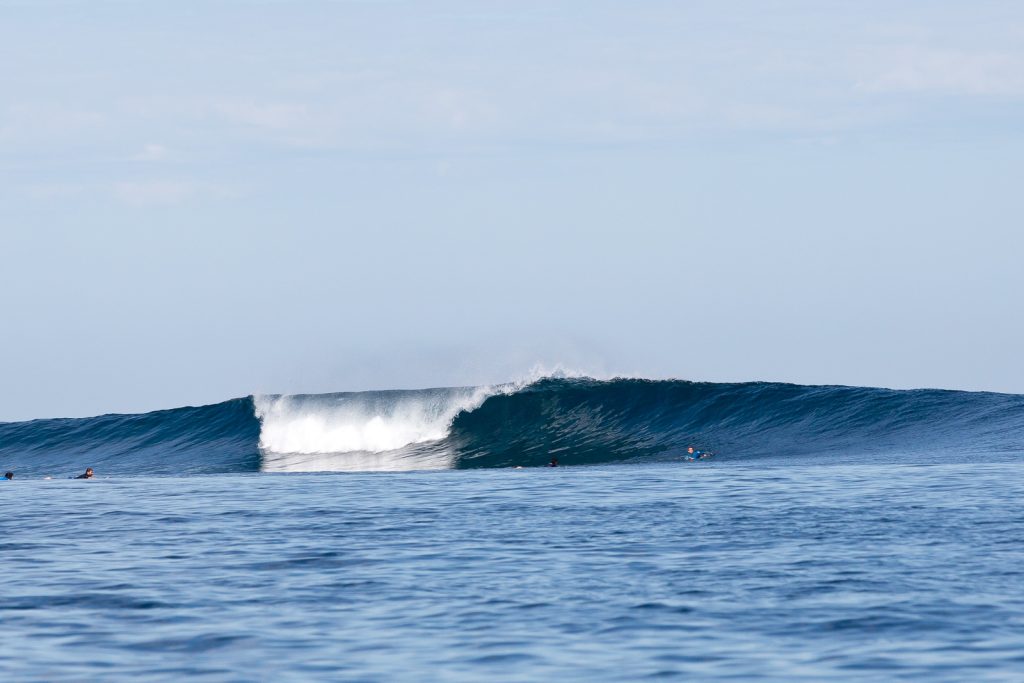
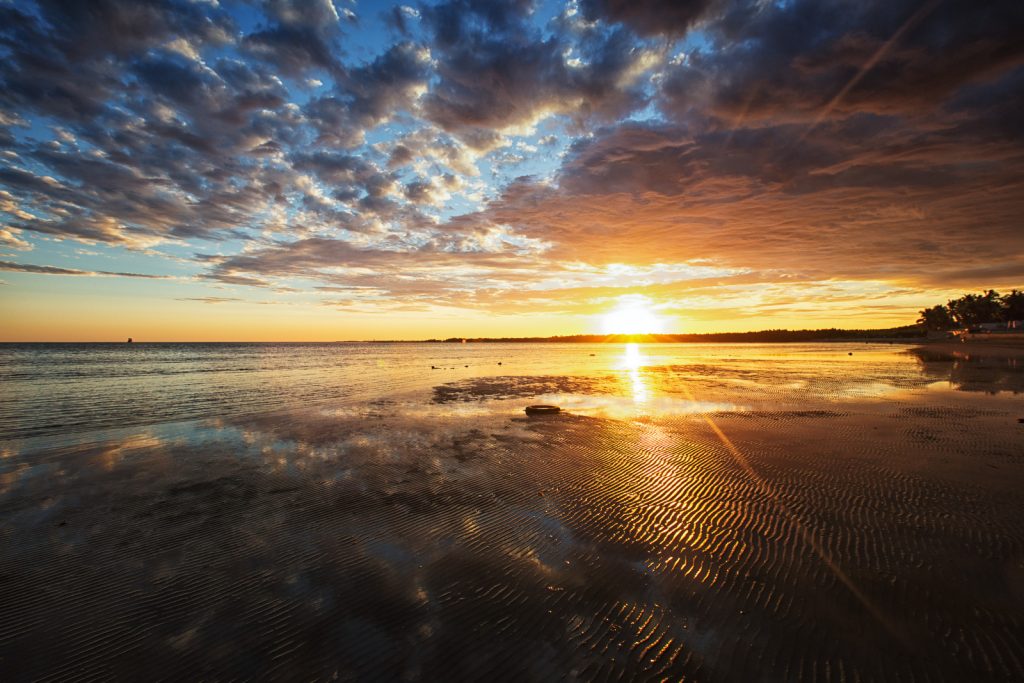
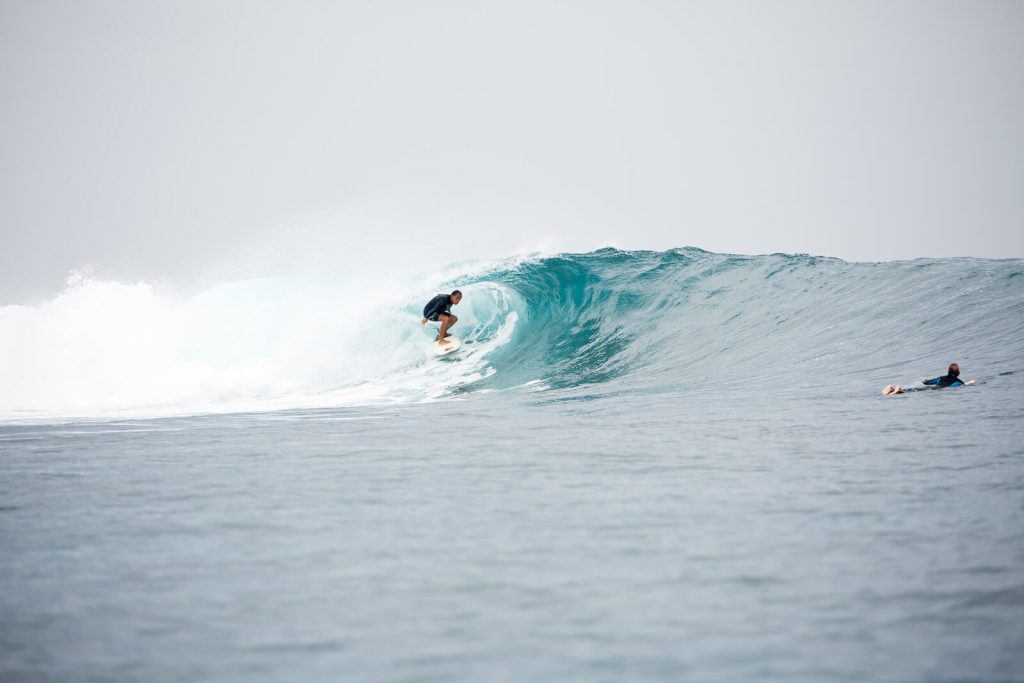
That very first surf will stay with you forever. Putting along the deserted coastline and marvelling at this beautiful island you dreamt of as a kid. At every turn a new headland appears; a glimmer of whitewash in the distance — “Is that it?” “No, just 10 minutes more.” We arrive: a perfect 4 ft left-hander reeling down for a good 200 m. It’s glassy, the wind has backed off. Not a soul out. The only time we see each other is as the other comes screaming down the line drawing big turns and throwing massive buckets — that stoke for mates equally rewarding. The water temperature is absolutely perfect — not hot nor cold. Fatigue set in at the 4-hour mark; we called it and returned to the boat as the sun began to reach the horizon. The elated grins as our exhausted bodies clambered aboard confirmed the months of planning, countless nights investigating, long travel and patience had all paid off.
We surf countless breaks to ourselves and, on occasion, meet other keen travellers. We make new friends and exchange information on where we are going or where they have been — knowledge passed from traveller to traveller is priceless.
At every place we stay another part of Madagascar unfolds — the people, the stories, the changing landscape and wildlife. It’s mind-blowing. A constant, though, is Malagasy hospitality — friendliness, genuine smiles and welcoming embrace. Unforgettable.
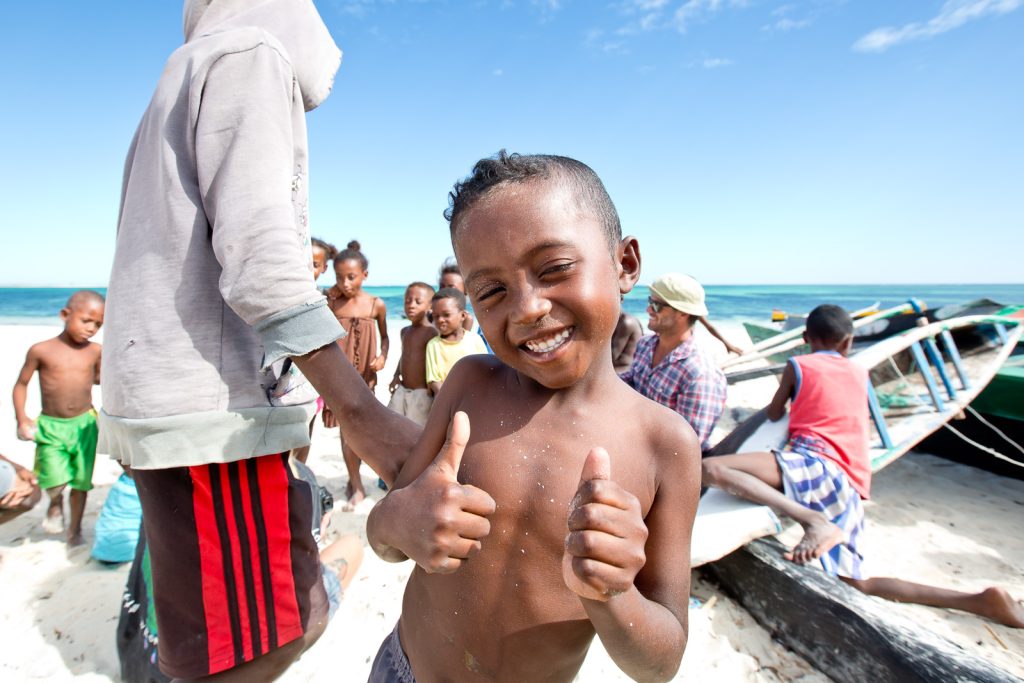
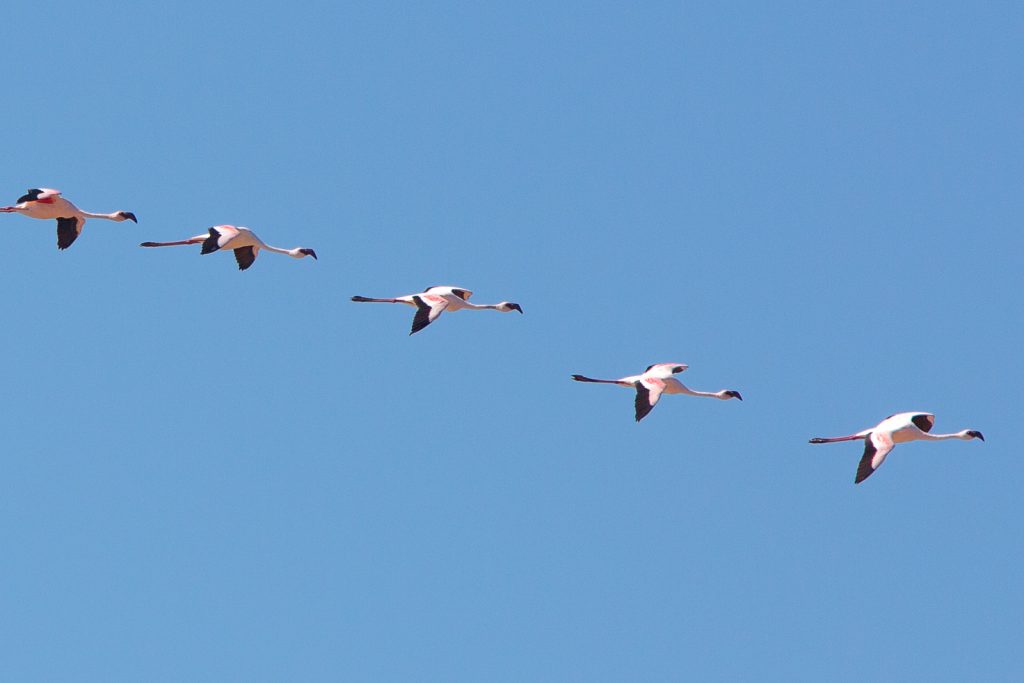
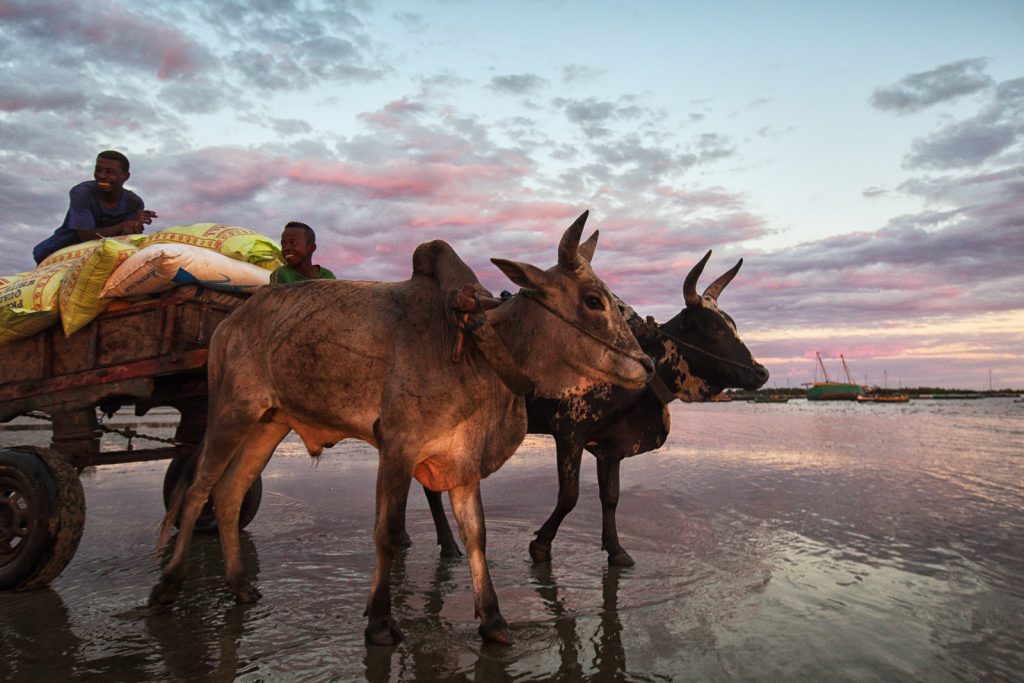
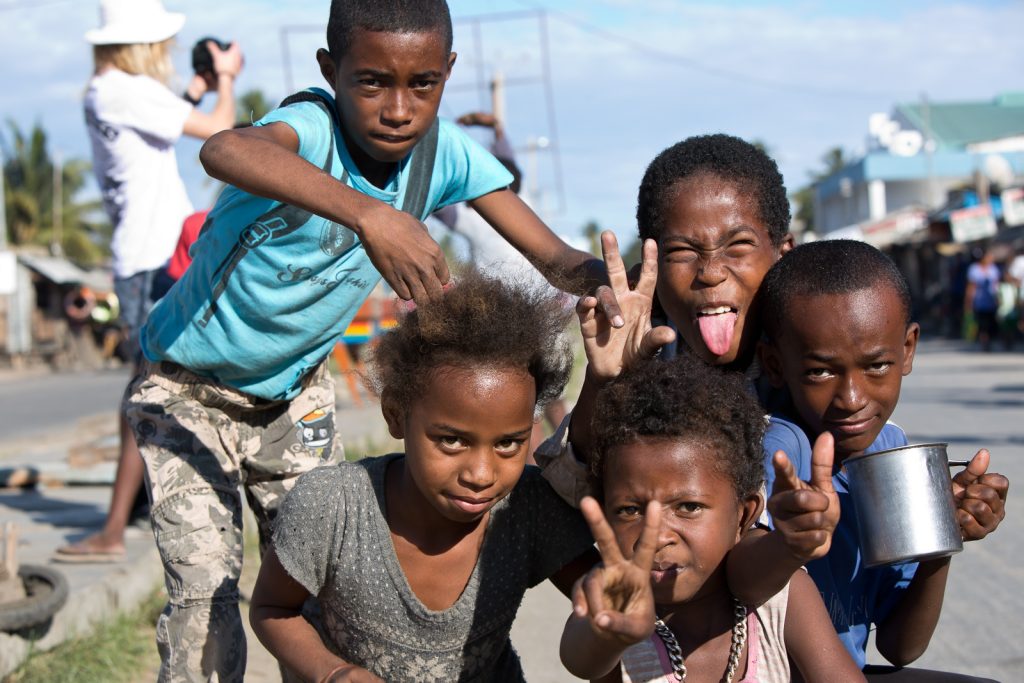
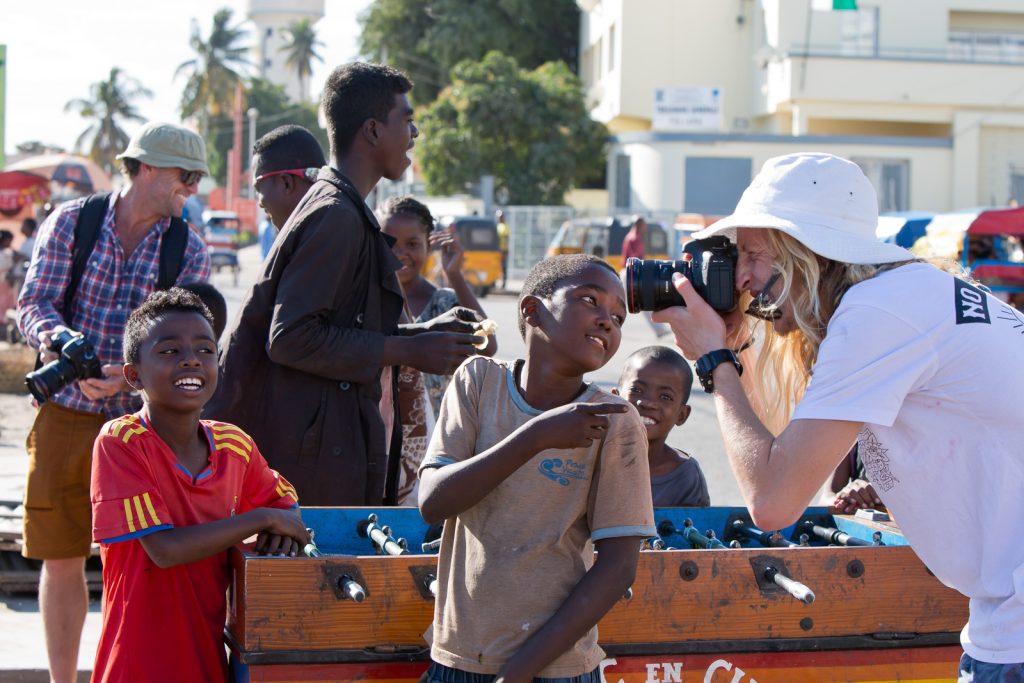
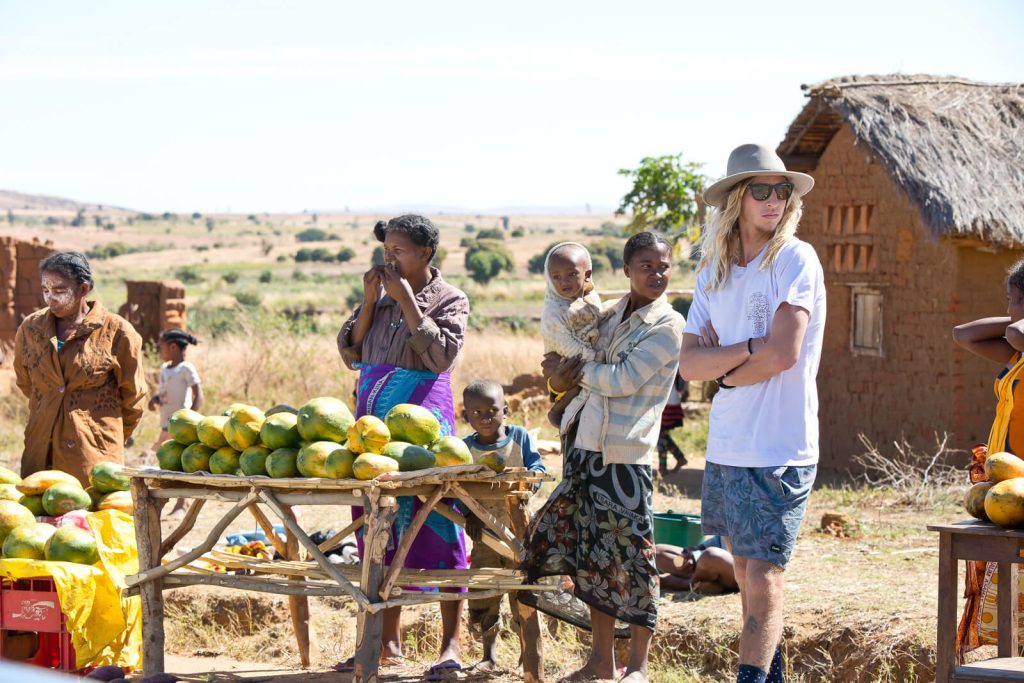
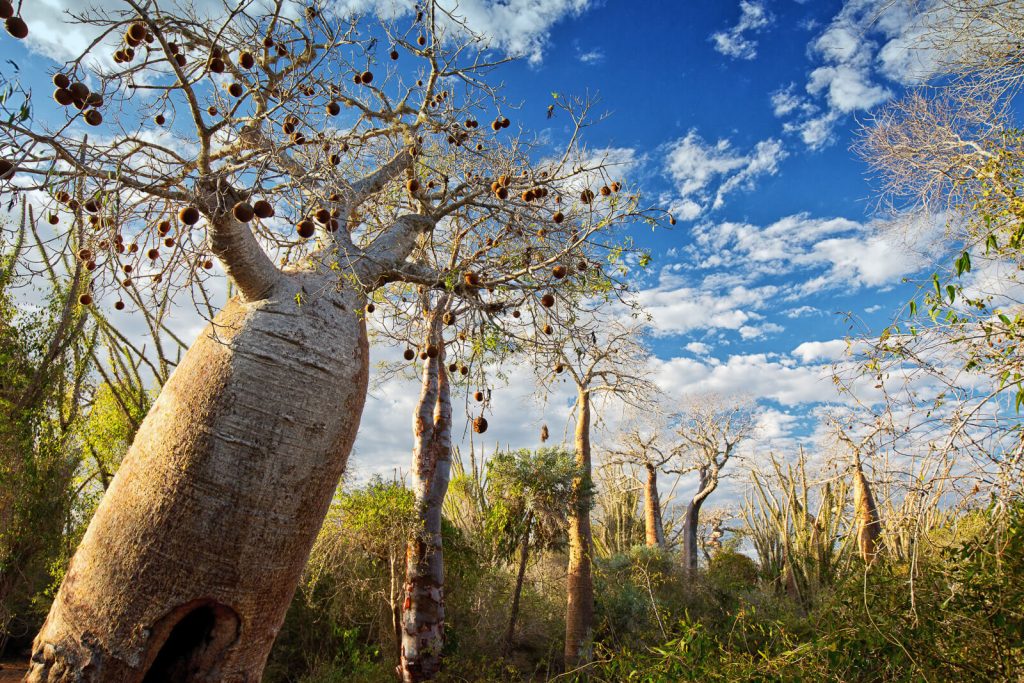
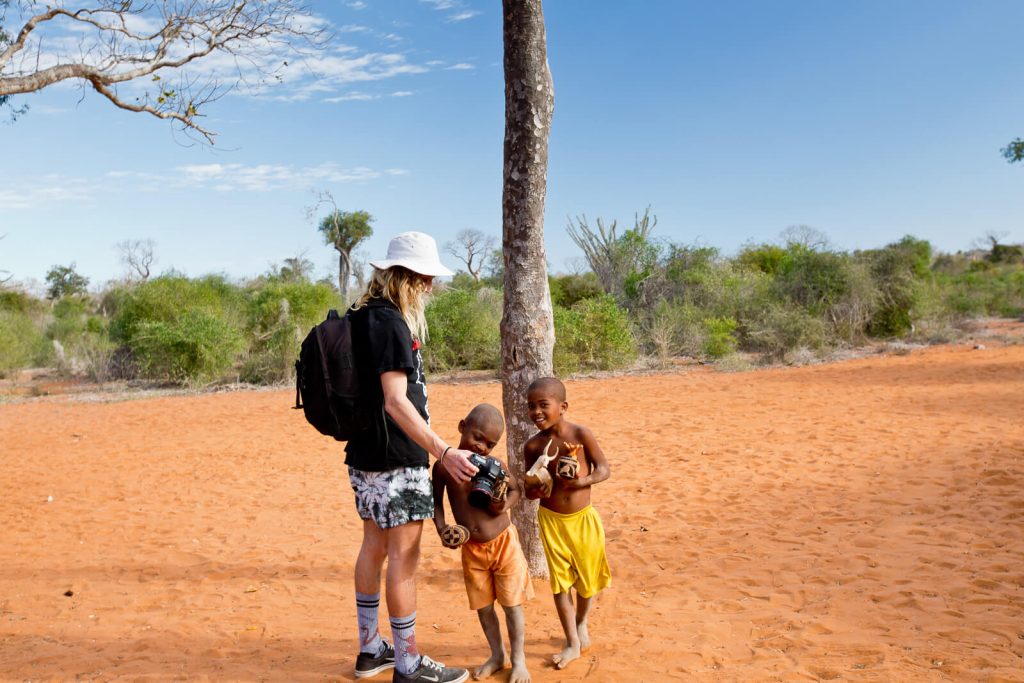
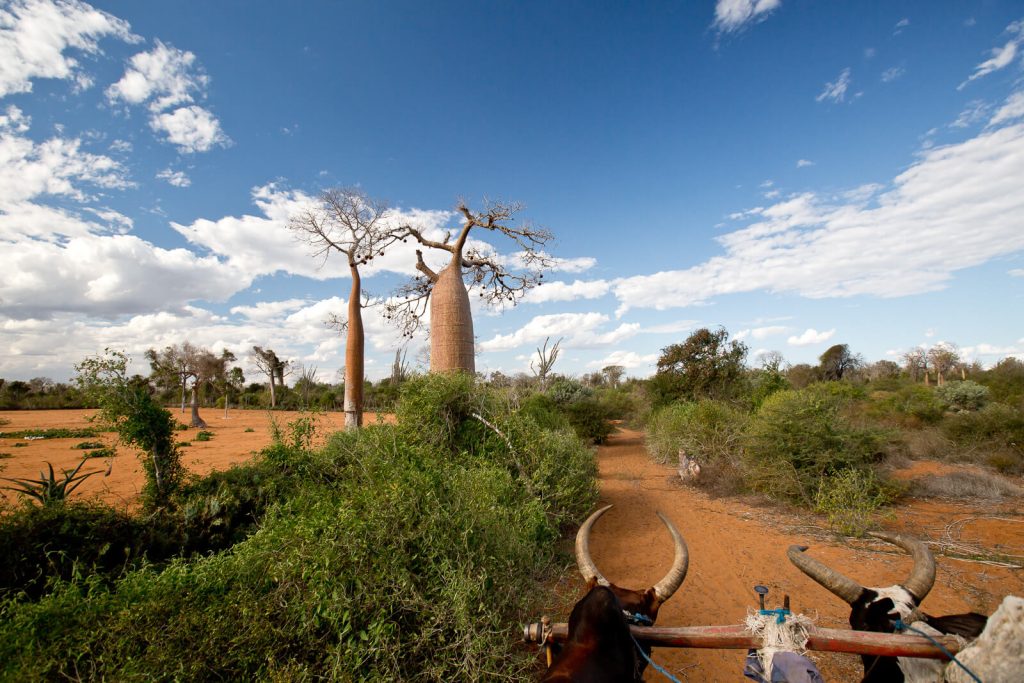
We spend a few days in each place. In Mangily the winds are predictable, so between surfs we take a tour of the local baobab forest. We hear the faint tinkering of cow bells as the zebu cart approaches for our pickup. Our guide is young, incredibly knowledgeable and speaks four languages — we’re in good hands. As we putter along, Jethro’s long blonde hair catches the attention of every kid along the way. He’s the pied piper here: almost instantly a procession of a dozen or so kids — laughing, singing and dancing — chases us along the orange dirt roads until we reach the forest entrance. The tour is amazing and our guide educates us on the local flora and fauna. The drone goes up and the kids go crazy; the zebu, on the other hand, are not so sure. Our land adventures are equally as rewarding as the surf. The amazing baobab forest in Mangily, the river banks of Anakao blanketed with flamingos, or the endless sand dunes travelling inland from the coast as far as the eye can see.
We are speechless on the transits between surf destinations, taking in all these breathtaking views and encounters.
We arrive by boat in the town of Anakao. There are countless breaks — mostly reef — but with varying appeal to all levels of surfer, from beginners through to chargers. There’s plenty for everyone when the swell is on. Anakao is to Madagascar as Bali is to Indonesia. With world-class waves right at your doorstep — like Flameballs and Kamezies — it would be hard to leave when it’s firing. We get plenty of fun waves; every day is suitable for all levels, with bigger swells letting the more experienced shine.
Getting here from Toliara is five hours by car or you can take the 40-minute speed boat. The southern parts of Madagascar are very arid, almost desert-like in parts. The coastline undulates; we encounter rivers, towering cliff faces 100 m high that quickly taper to nothing and back again. It’s surreal.
Many places are without the modern conveniences we take for granted — electricity, hot water and refrigeration can vary place to place.
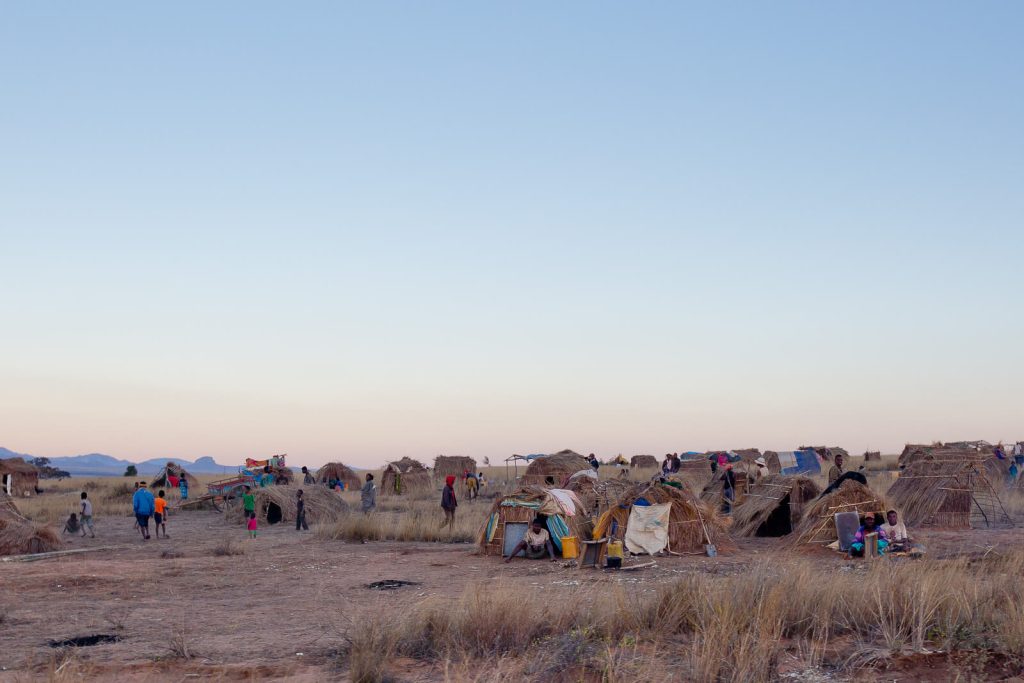
The locals live a very basic lifestyle; their crops and zebu hold status in the village. A rich man here has 100 zebu — the monetary value of things doesn’t factor into day-to-day life.
We eat local produce daily. Freshly caught fish when on the coast; potatoes, carrots and zebu (beef) are the staple foods when away from the bigger cities. The water we drink is all single-use bottles — not ideal. Though the Malagasy are resourceful and don’t throw these away. Being a Westerner, plastics are an unfortunate by-product of travel.
Within a few days we switch off from our western lives and find time to reflect on just how amazing the planet is — and how important it is to protect it. We’re reminded every day here of how fortunate we are in first-world countries: the basics — food, water, electricity, education… the list goes on. These are just a few of the struggles encountered here every day. No almond-milk cappuccinos. The government appears to be corrupt, according to every conversation we had with locals and regular visitors who’ve been coming for 20+ years.
After a long day of surfing empty crystal-clear waves, we eat, drink and chill under clear night skies illuminated by the Milky Way.
Germans, Swiss, French, American and Australians — we’re a mixed bunch of surfers at all levels exploring this part of the world and enjoying each others company.
Our last night on our surf adventure saw us back in Toliara embracing the local nightlife. The club of choice was a lean to shed in town with an alfresco indoor outdoor feel. The dance floor was out under the stars. Rum was $4, served by the bottle. We sat for hours chatting amongst our newly found friends, drank our rum whilst always under the watchful eyes of the inquisitive locals dancing around us.
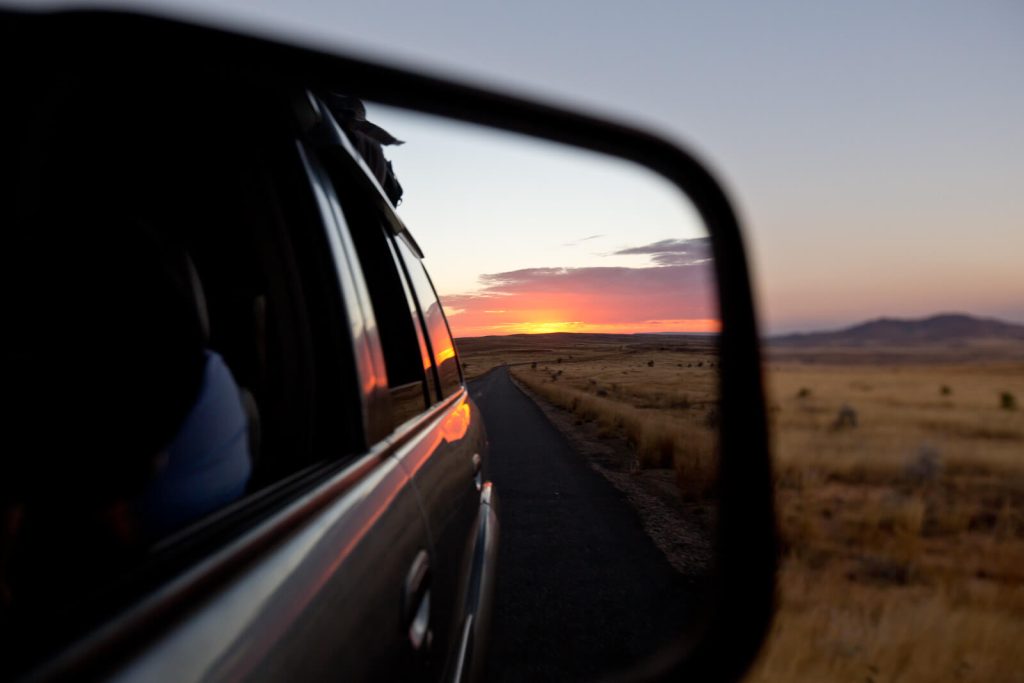
Our surf safari comes to an end and our 4wd road journey across the country begins. We embark on a 12 day adventure across the country to the far north east, visiting 5 national parks, with our final destination the island of St Marie, home of the world’s only pirate cemetery.
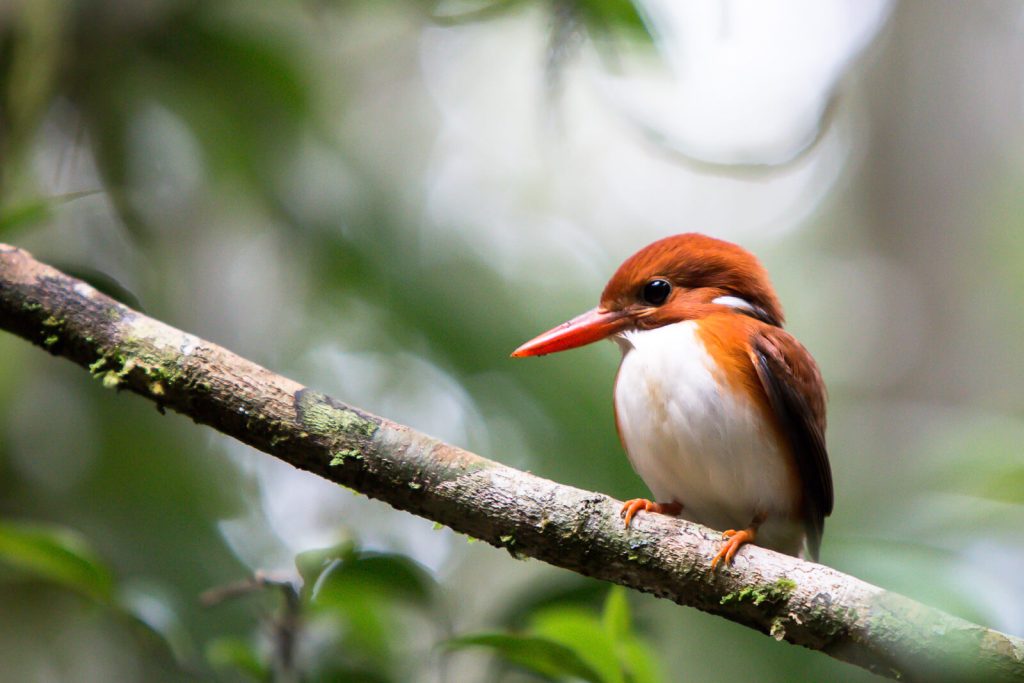
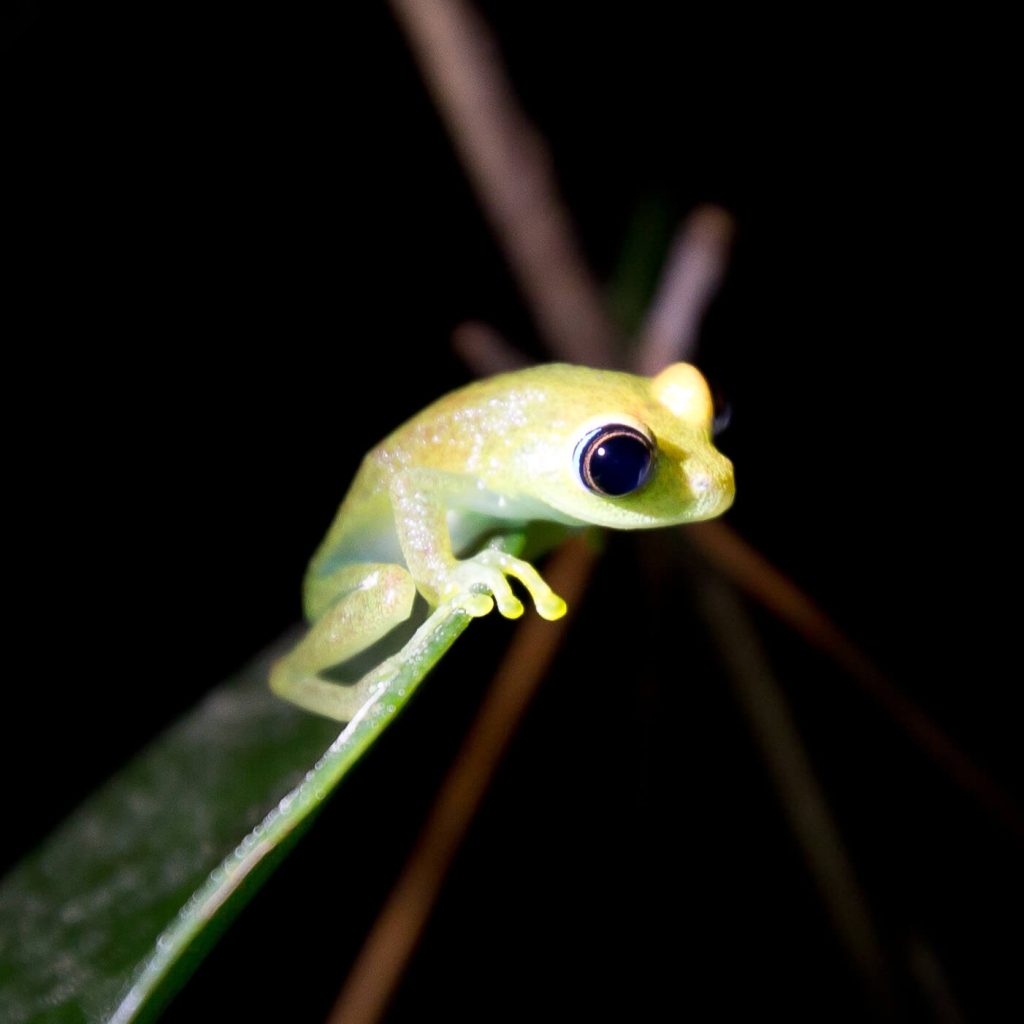
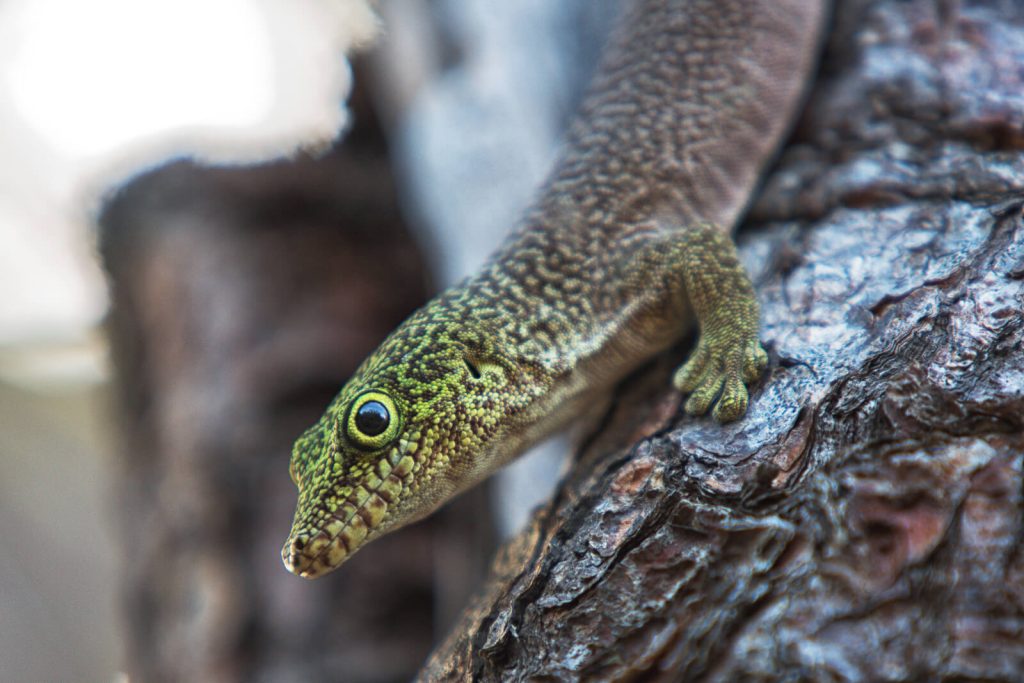
Having watched Sir David Attenborough deliver documentaries to our screens our entire lives still didn’t prepare us for such amazing scenery and wildlife.
Isalo national park was the first park we visited, we spent a full day hiking through it and didn’t scratch the surface. The park is the size of our Australian Capital Territory (ACT) you could spend months here exploring parts rarely never seen by tourists.
At every park we provided a guide, they lead you through the parks, find things with their trained eye and educate us along the way.
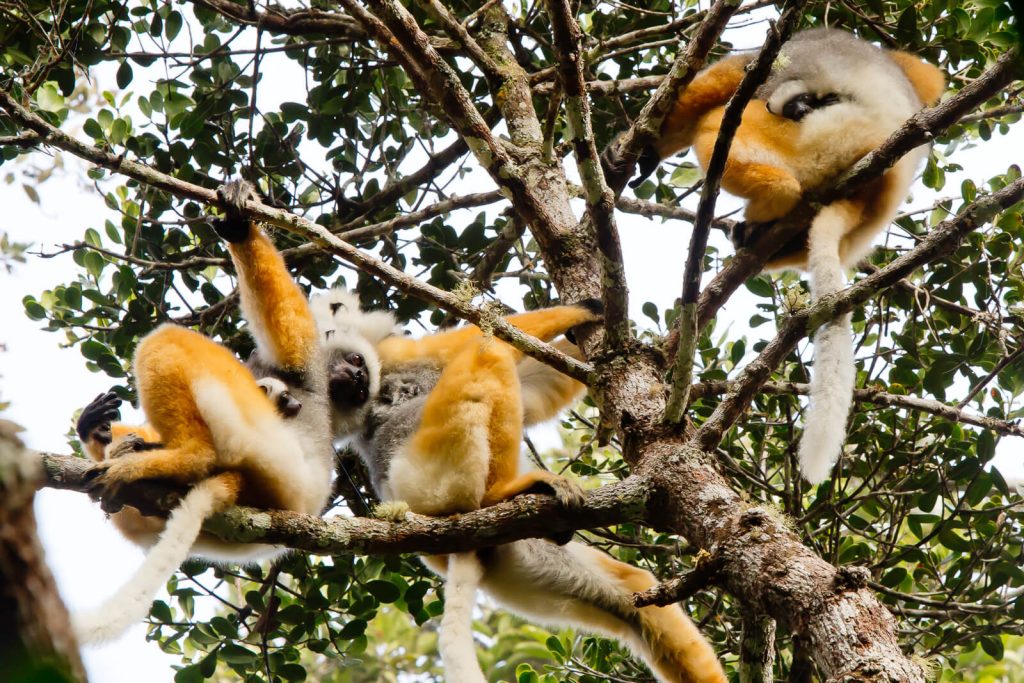
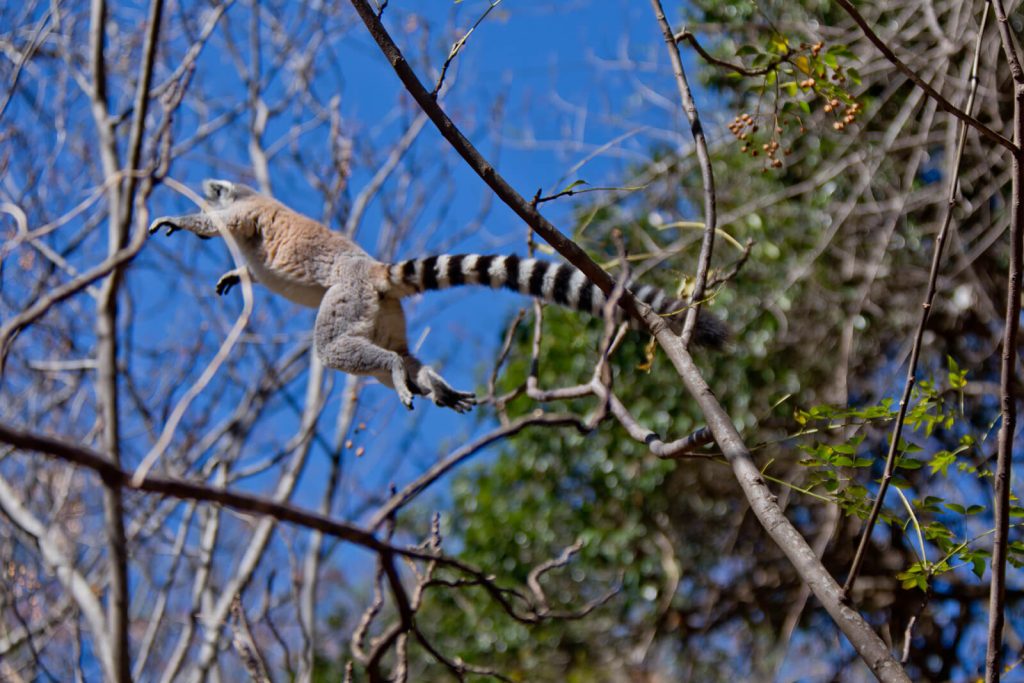
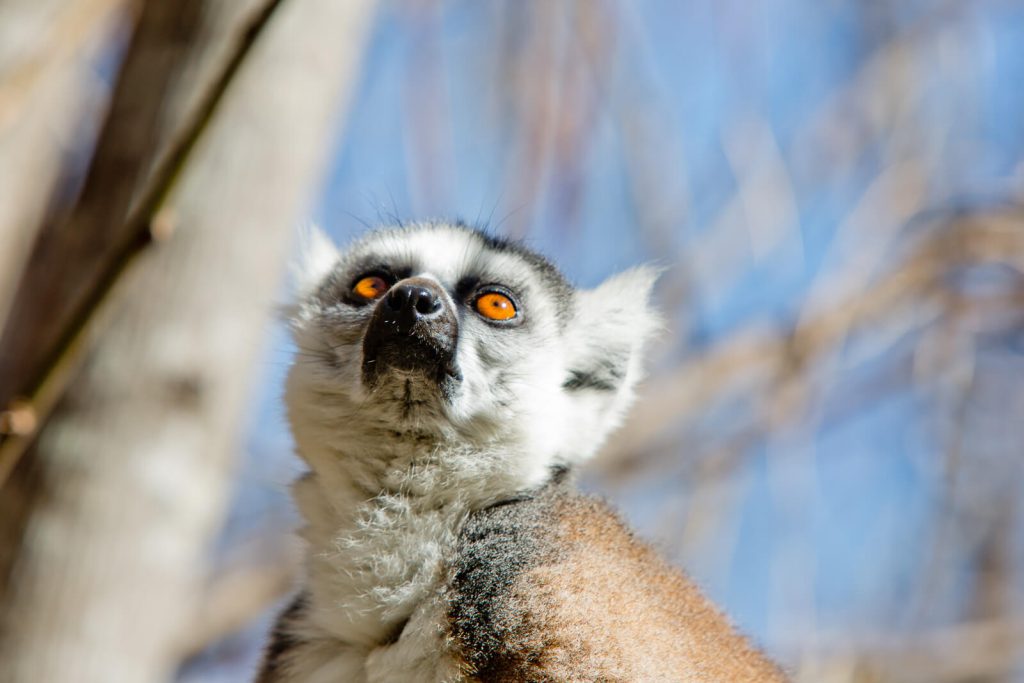
With every park we encounter a different species of Lemur. From the very small and curious ring tail to the very large Indri species.
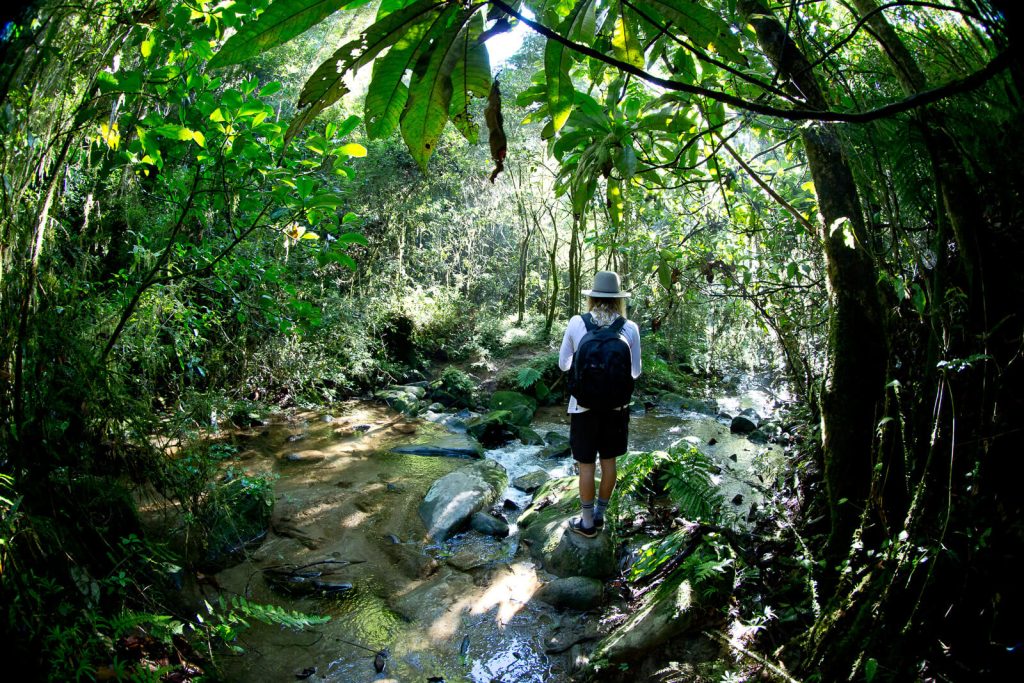
The landscape changes drastically as we travel 1200km across the island. We find ourselves leaving behind the dusty orange sands of the Baobab forest and find ourselves in incredible dense lush tropical rainforests unable to see the sun. We move lightly and quietly at all times, listening ever so carefully for our next surprise encounter big or small.
Unlike Australia there’s very few things that can kill you, so you feel very comfortable as you trek through the parks.
Scale is hard to measure here, It’s mesmerising. Huge rock formations looming in the distance while driving, then all of a sudden your dwarfed, you crane your neck as they tower beside you and disappears into the clouds.
We leave the mainland from the sleepy town of Mahambo, board the ferry and 2hr later arrive on St Marie, home to the world’s only pirate cemetery. We then take ourselves across a tiny channel to ile aux nattes. The locals paddle you across a 50m channel in their tiny dug out canoes. ile aux nattes is one endless beach.
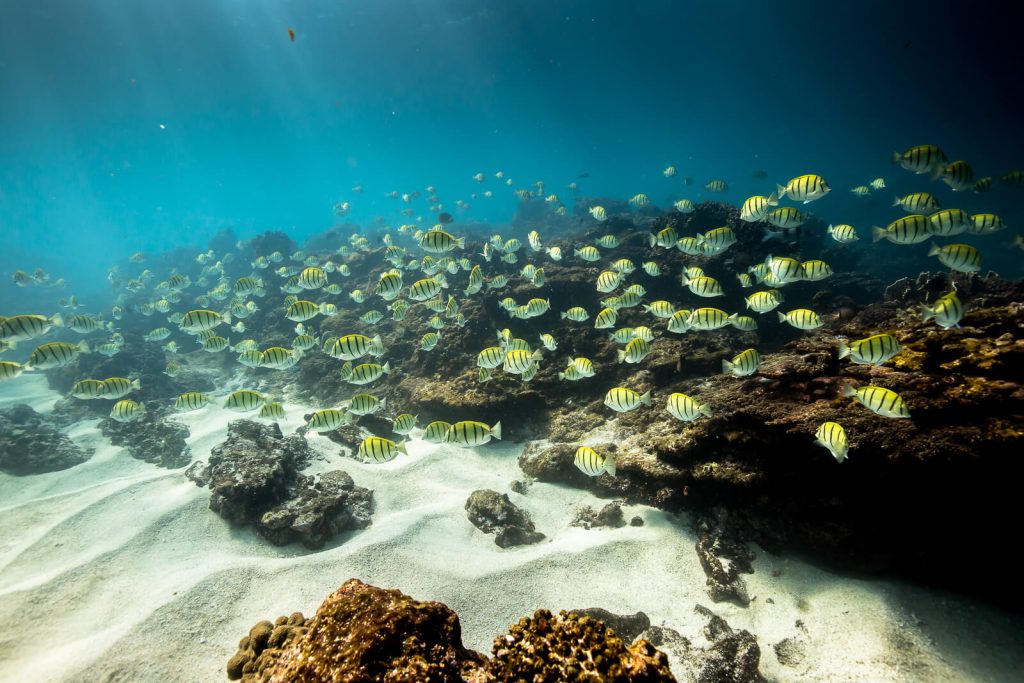
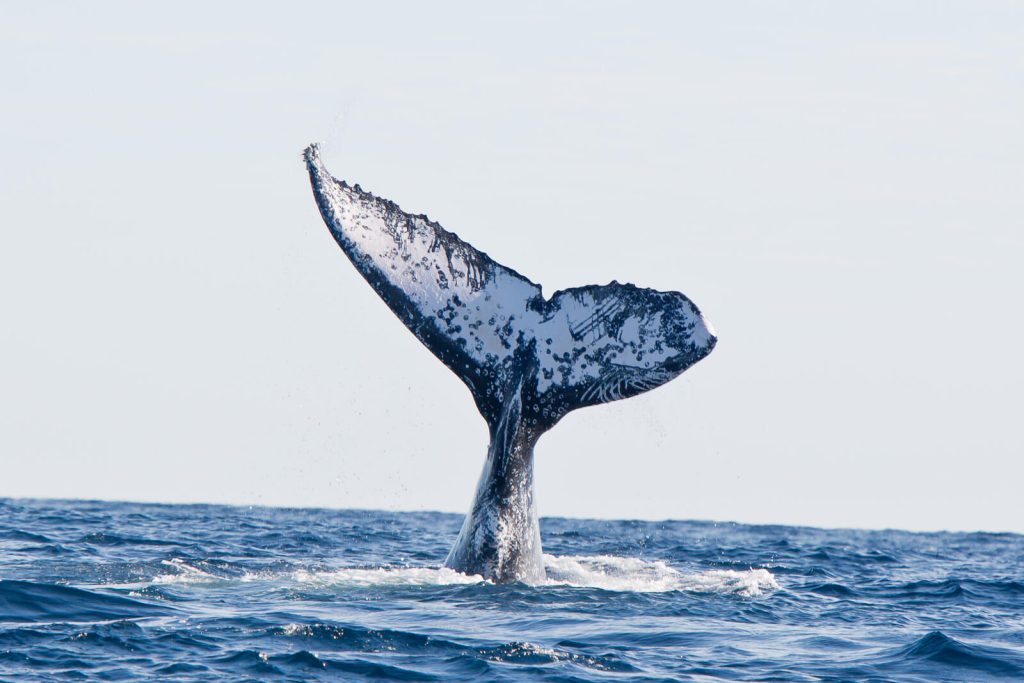
A couple days here see’s us out whale watching, snorkeling and just relaxing after weeks non-stop incredible experiences.
Madagascar is definitely a place worth visiting a few times as to explore the north, south and the many amazing places in between.