
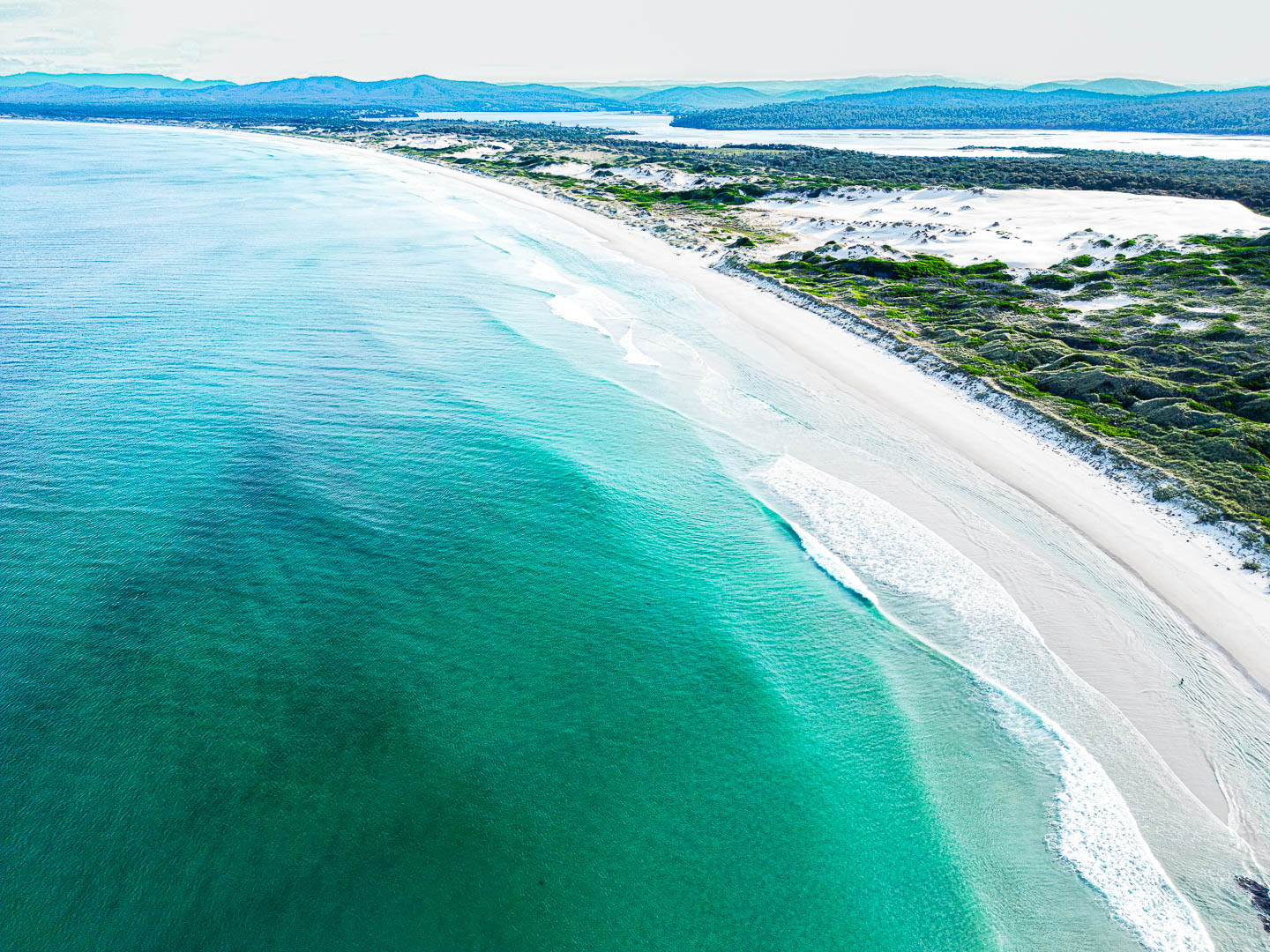
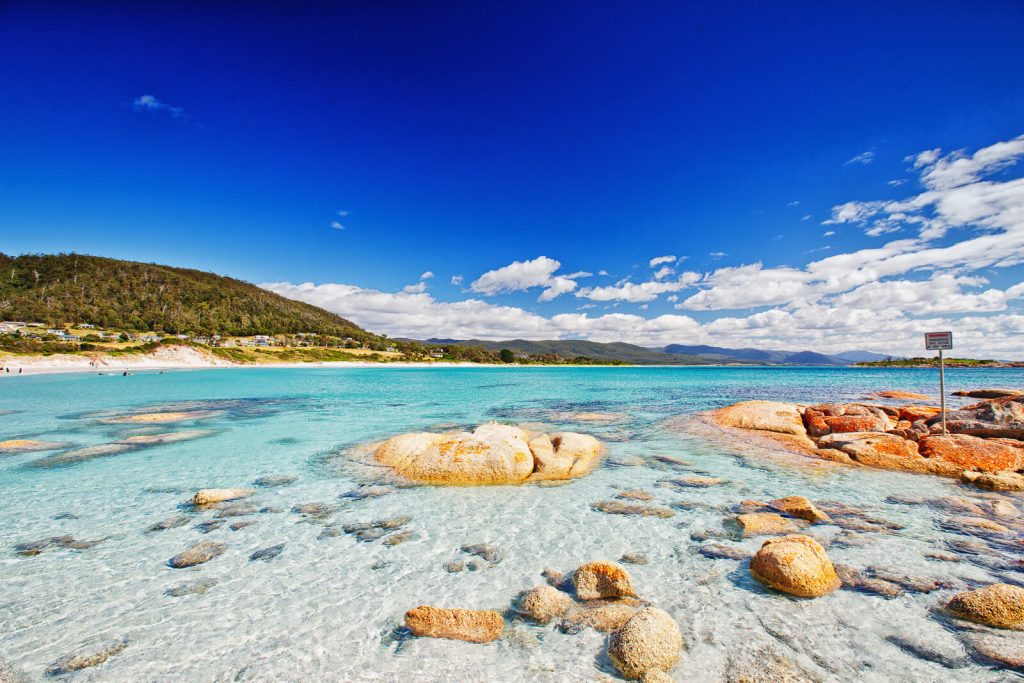
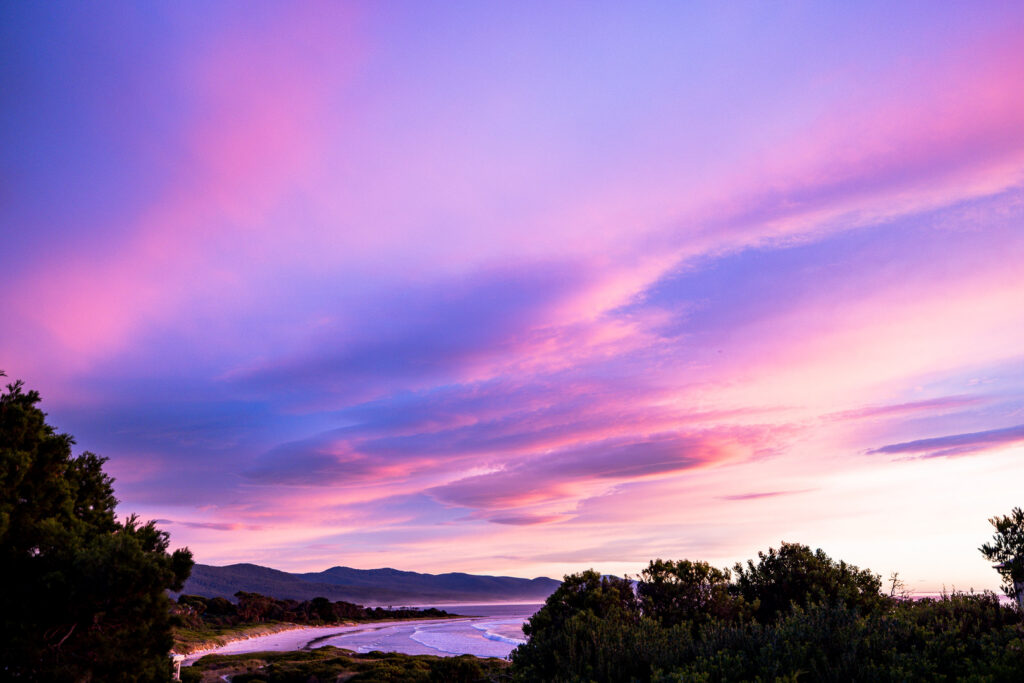
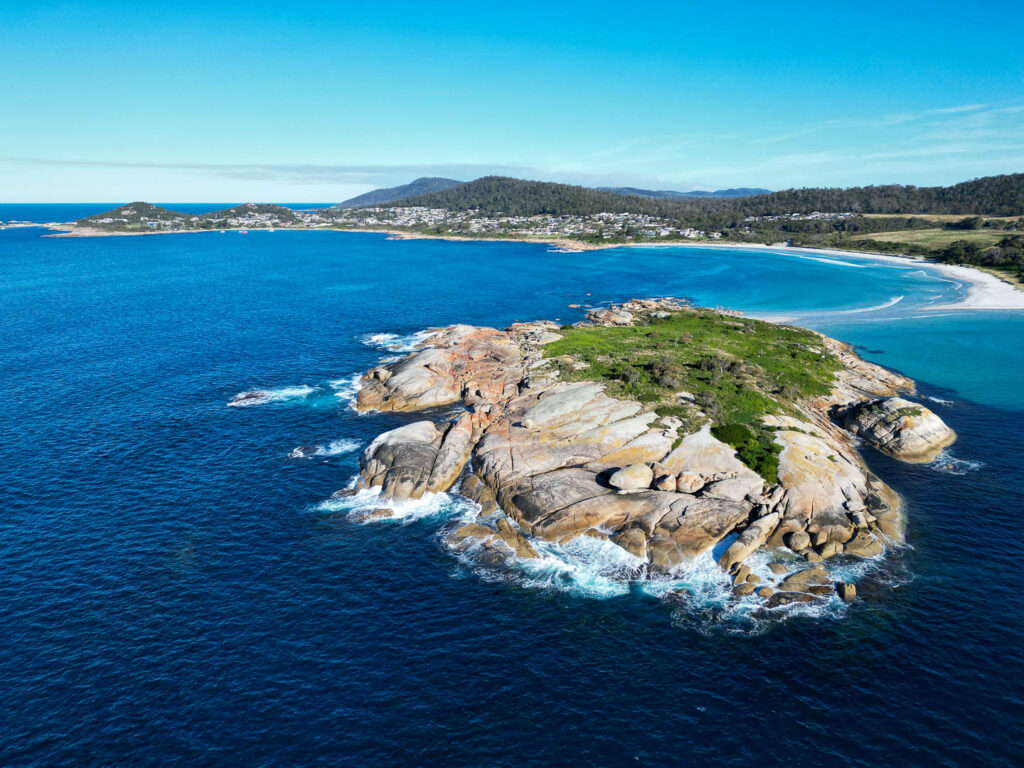
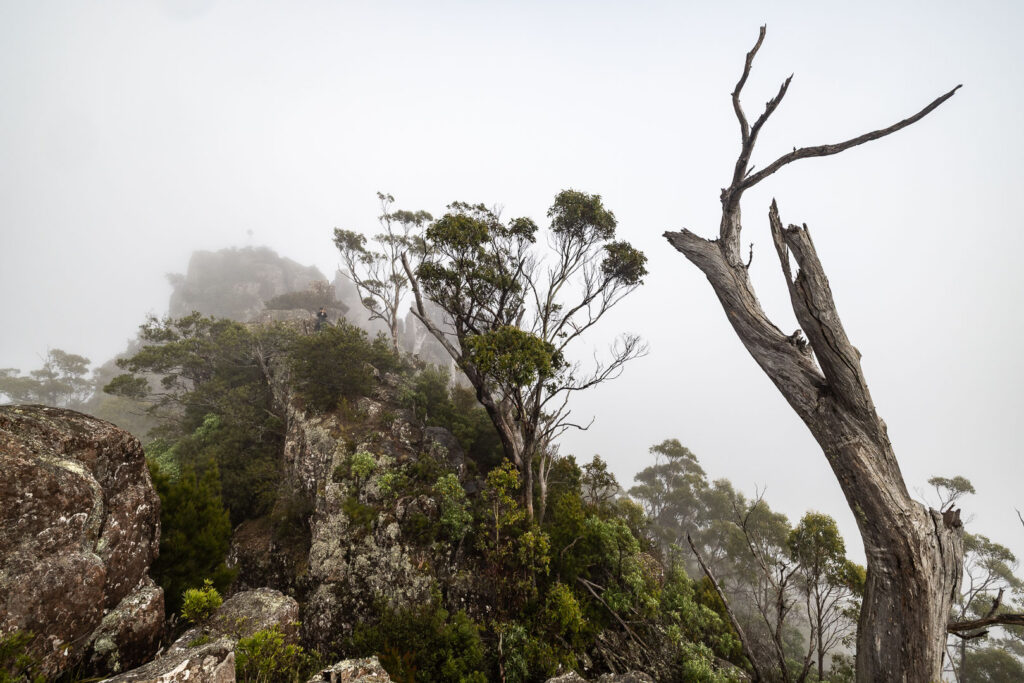
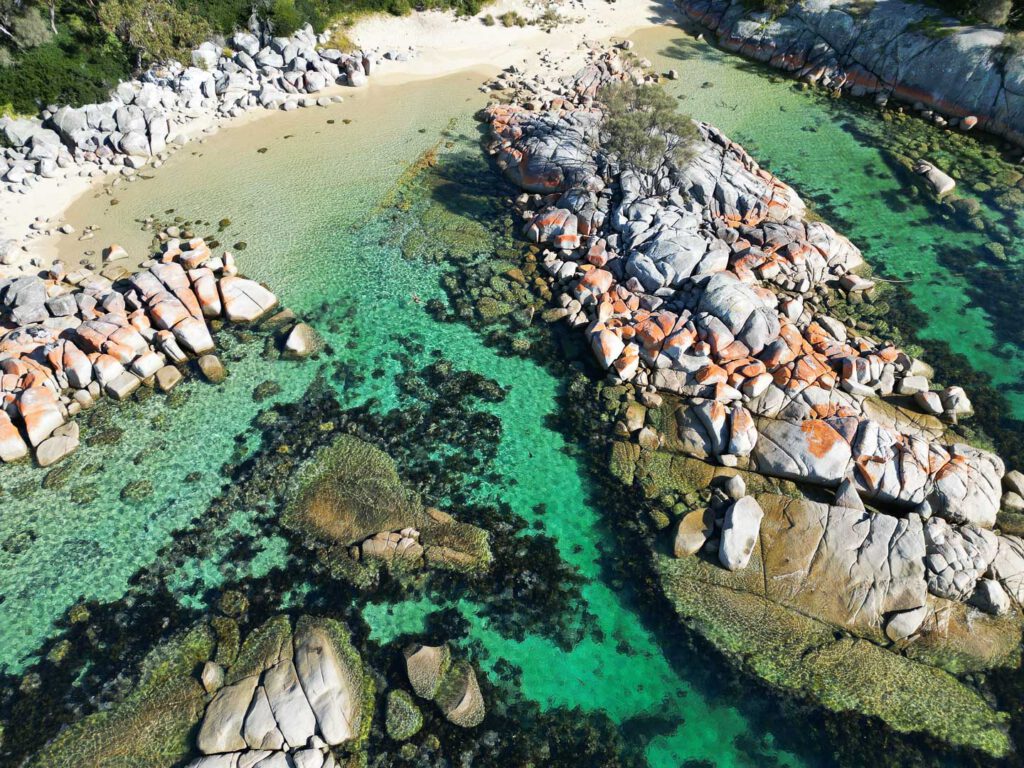
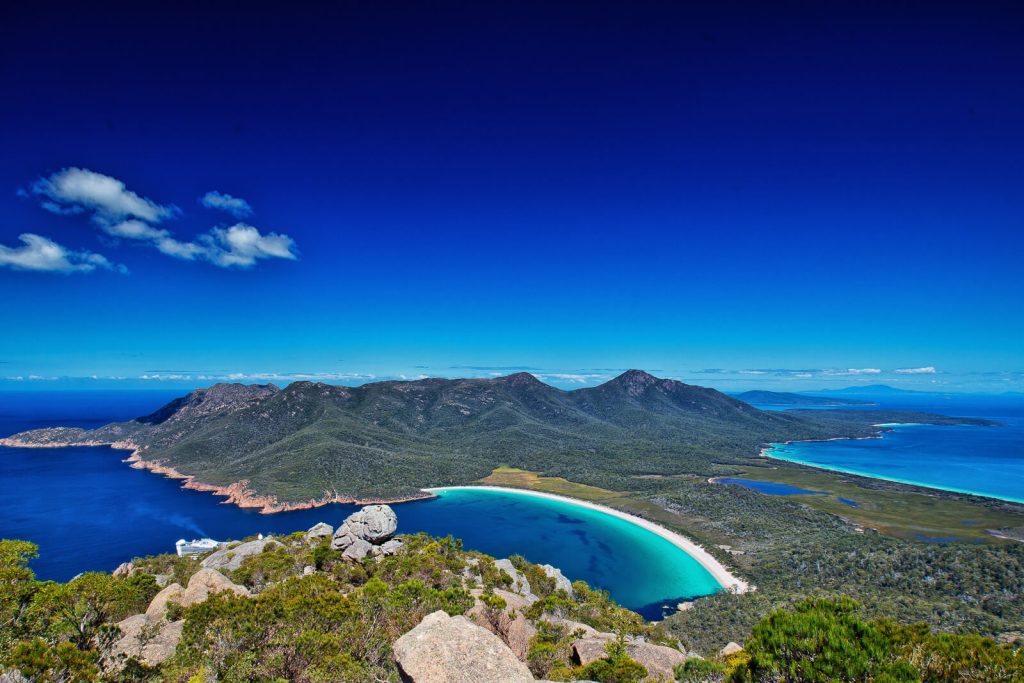
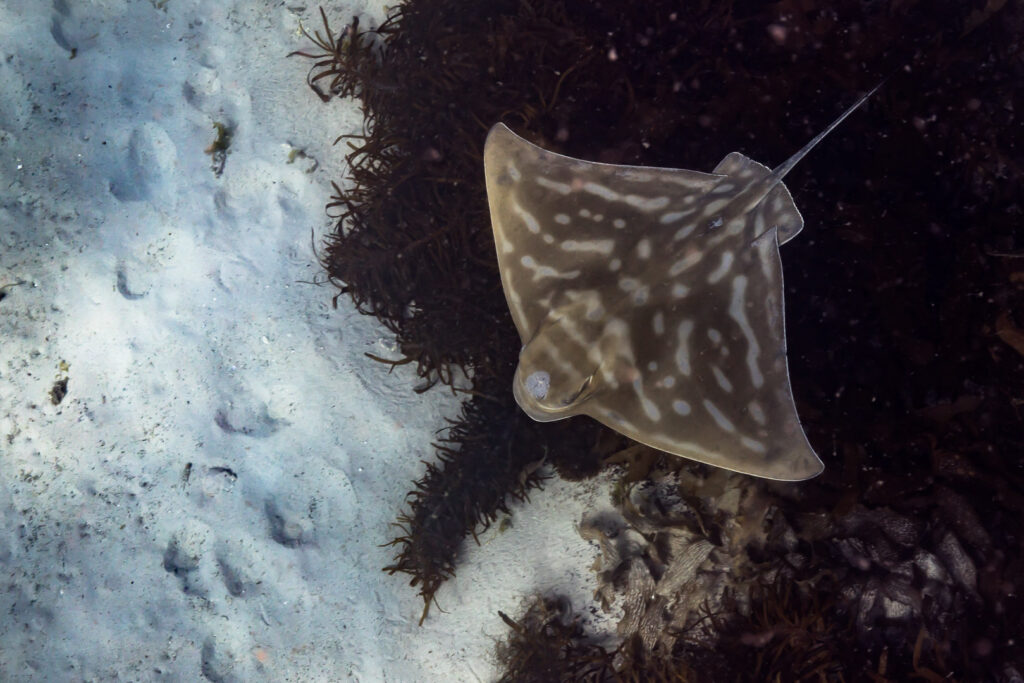
We spent just over two months in the beautiful little coastal town of Bicheno on Tasmania’s east coast.
The reason we ended up there was simple enough — we were looking after a dog for friends. It meant we couldn’t travel too far, which, in hindsight, was probably the best thing that could have happened. Rather than constantly moving, we settled into the rhythm of one place and focused on everything immediately surrounding us.
And Bicheno has plenty to offer.
Our temporary home sat perched on top of a small hill overlooking Red Bill Beach, with sweeping views up the coastline. The house itself was modern and thoughtfully designed, a passive home that somehow stayed warm and cosy without effort. There was a small vegetable garden we helped care for, feeding ourselves from whatever was ready to harvest at the time. It quickly felt less like accommodation and more like home.
We both worked remotely, so life became a balance between work and adventure. My dining table became my office, though with uninterrupted ocean views it was often difficult to concentrate for too long. Every morning started the same way: coffee in hand, eyes fixed on the beach and conditions below.
The big questions were always answered first:
Will I surf or will I dive today?
The daily rhythm usually began with walking the dog into town for coffee at Governörs Café. It didn’t take long for the staff to know both your name and your order. Good coffee is one thing, but good morning banter with your local barista goes a long way too. Governörs quickly became part of our routine and, in our opinion, served some of the best coffee on Tasmania’s east coast.
Bicheno itself had everything we needed — cafés, a small supermarket, Sunday farmers markets and a surprising amount of locally produced wine, beer and whisky. Life felt simple there in the best possible way.
Over the ten weeks we explored far beyond town as well, travelling north toward St Helens and Scamander, south through Swansea and Freycinet, and occasionally as far as Hobart and Launceston. We surfed, hiked, dove and explored whenever work allowed.
The east coast really delivered everything we could want: pristine beaches, uncrowded surf and crystal-clear diving.
One particular surf session still stands out vividly. Multiple A-frame peaks running down the beach, only three other surfers out, glassy conditions and sunshine. One of those rare 10-out-of-10 sessions where everything lines up perfectly and nobody wants to leave the water.
The diving was equally memorable.
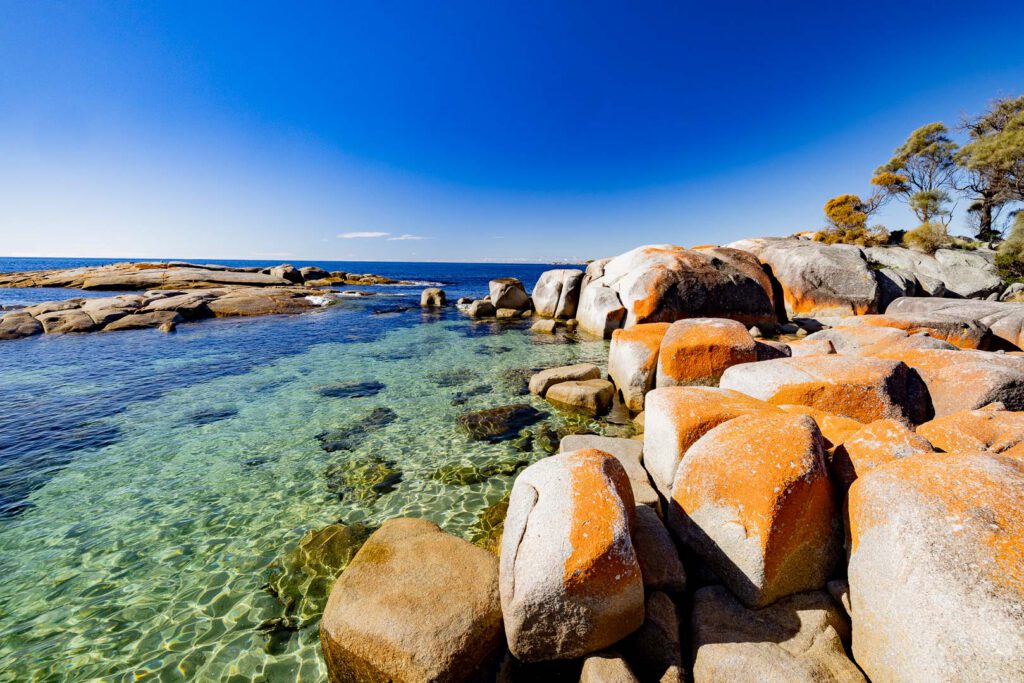

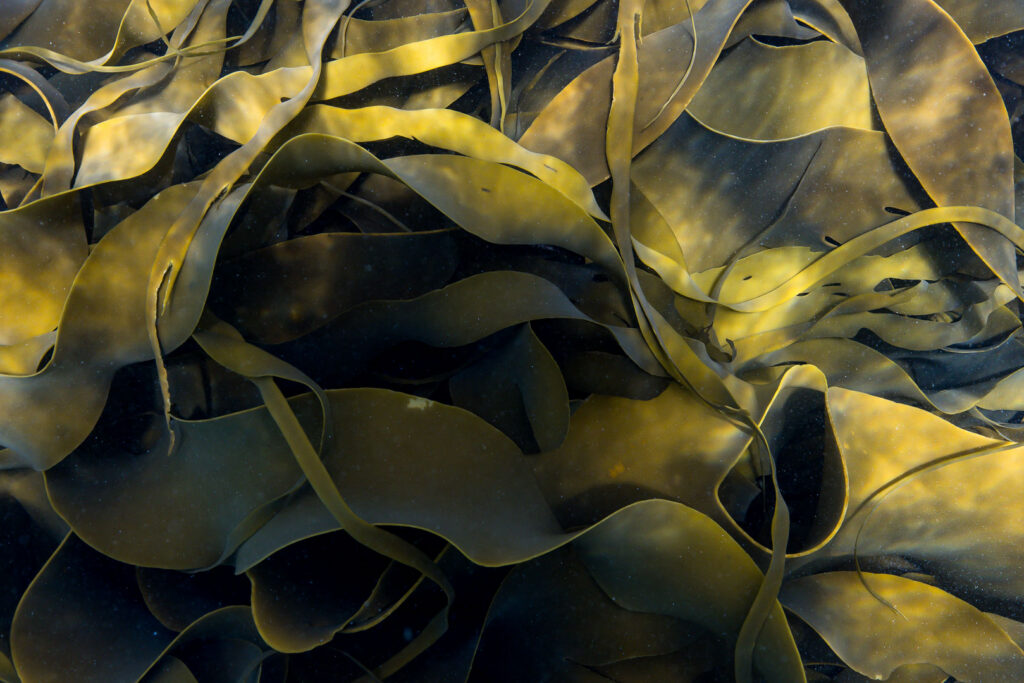
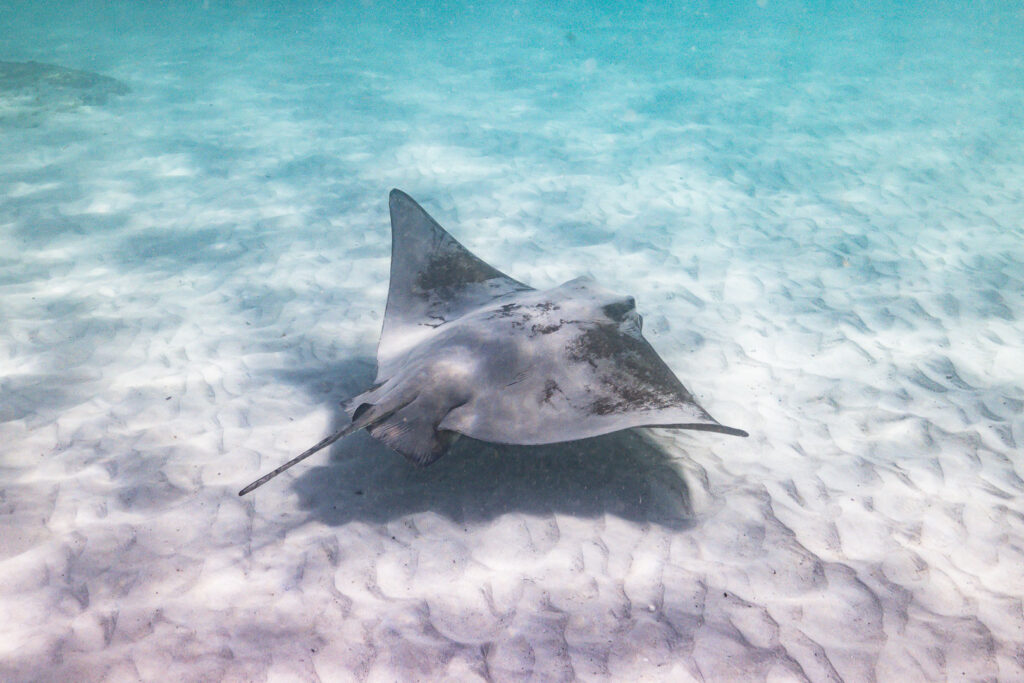
Waubs Bay became my local spot, just five minutes from home. As a freediver I quickly reached out to local divers and made new friends — dive buddies are essential, especially ones who dive better than you. Through them I was introduced to reefs, bays and underwater landscapes I never would have discovered on my own.
On one particular dive at Waubs Bay, I spotted a weedy sea dragon tucked carefully amongst the weed beds below. Mindful of depth and surface recovery times, I descended carefully, hoping not to spook it. Somehow it stayed calm long enough for me to take in the moment properly. Finding one was thrilling enough, but having it remain relaxed and curious in my presence made the encounter even more special.
The wildlife encounters above water were equally memorable.
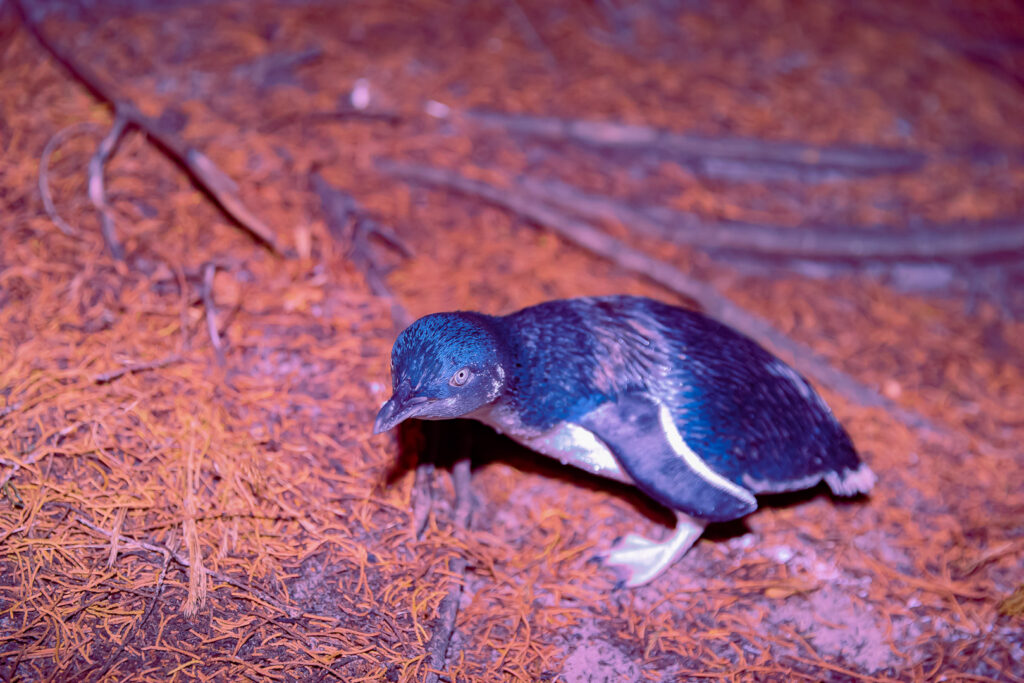
The little penguins of Bicheno are absolutely adorable. At dusk they emerge from the ocean and shuffle back through the scrub toward their burrows. The guided tours here are fantastic — carefully managed using red-light torches and strict viewing distances to ensure the penguins aren’t disturbed during feeding and breeding. On early morning walks we could often hear them rustling around in the scrubland along the foreshore. Honestly, there are worse ways to start your day.
But the wildlife encounter none of us expected was Neil.
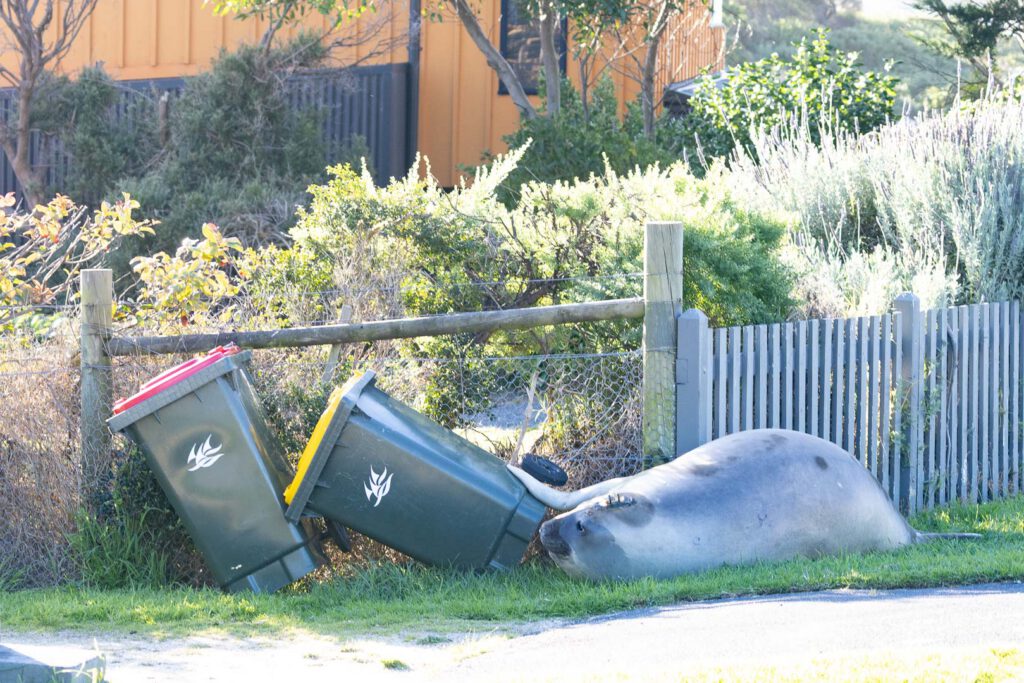
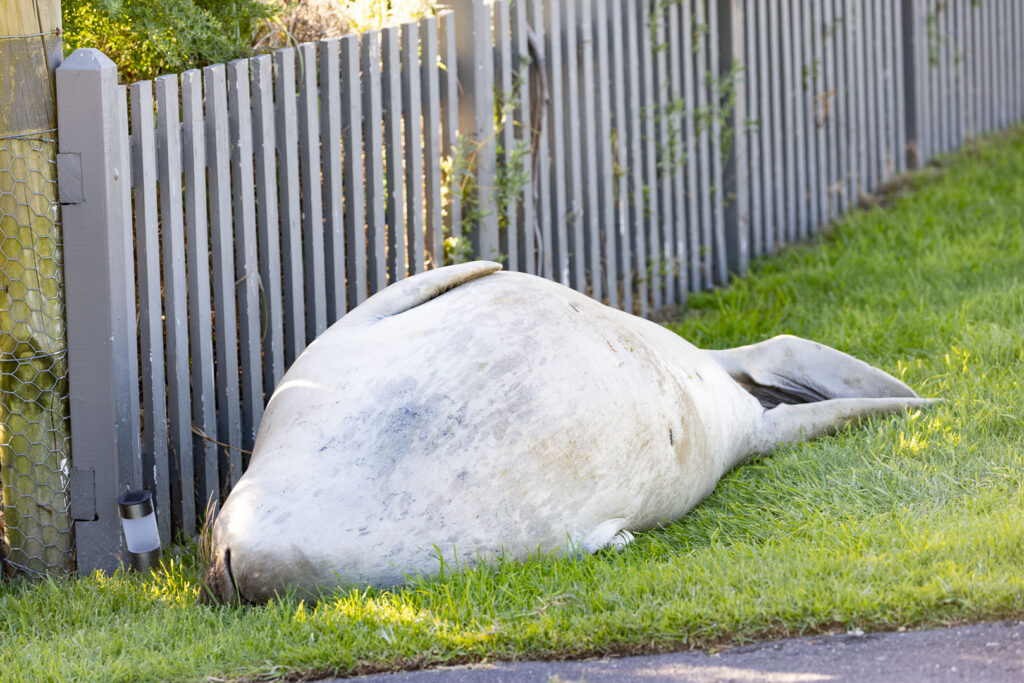
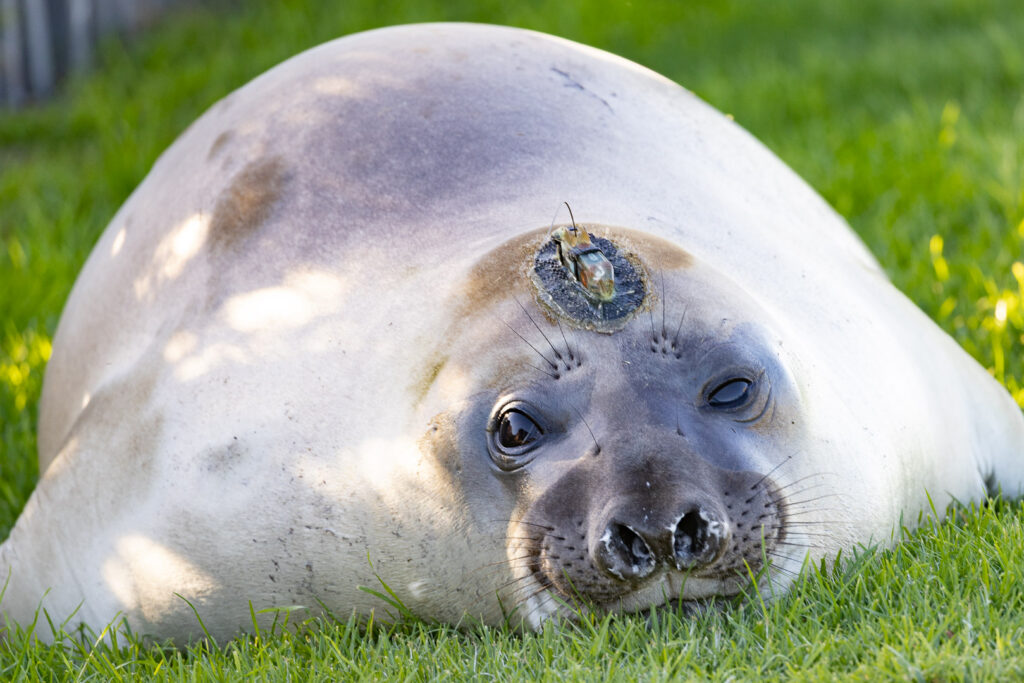
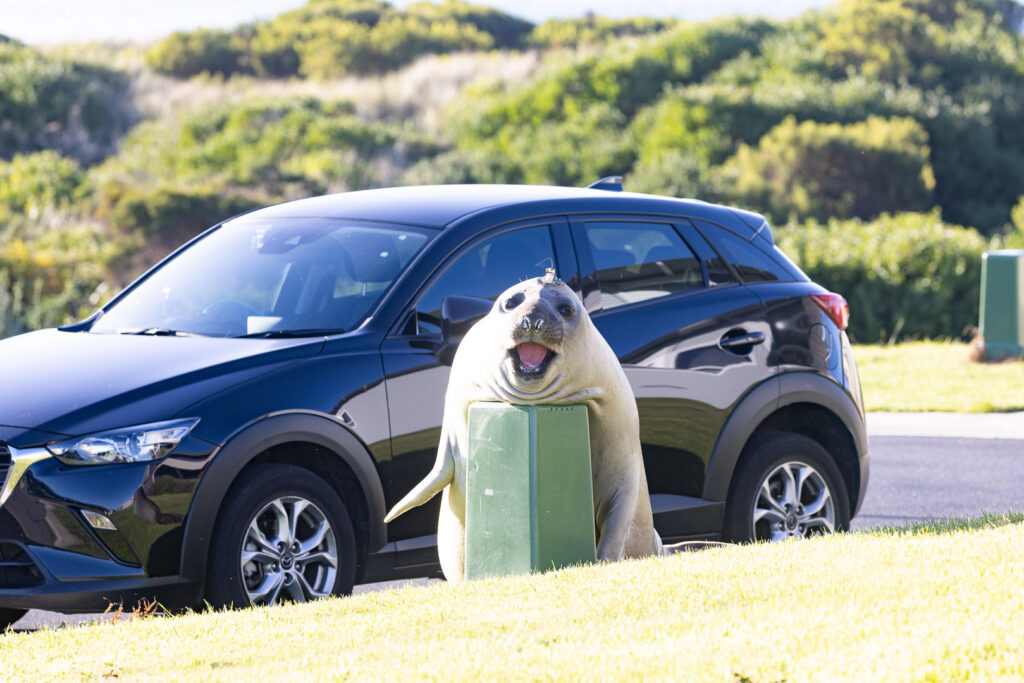
Neil was a juvenile elephant seal and, at the time, weighed somewhere around 300 kilograms. Over the coming years he would grow to nearly three-and-a-half tonnes. Somehow, this young seal had travelled an enormous distance north from Macquarie Island — roughly halfway between Tasmania and Antarctica.
The story started casually enough. One morning over coffee, our barista mentioned that a seal had been spotted down at nearby Denison Beach. Camera in hand, I headed off in search of him. I spent hours wandering the coastline, looking for tracks and scanning beaches, but found nothing.
By the following morning, Neil had found us instead.
Our temporary home sat at the end of a long driveway leading down toward Red Bill Beach. Somehow, overnight, Neil had hauled himself up from the beach, through the nearby park and halfway up our street. He was sitting directly at our front gate, almost like the postman dropping off mail.
Completely surreal.
For the next few days Neil became part of the neighbourhood. We worked closely with Parks and Wildlife to help keep him safe — maintaining distance from curious onlookers, helping keep him away from roads and updating authorities on his movements.
Before long, Neil had gone viral online.
Media outlets began contacting us wanting his exact location and photos, but we made the decision to prioritise Neil’s wellbeing over social media attention. His location remained largely protected while Parks and Wildlife managed the situation.
It felt strangely fitting that this enormous, wayward animal became part of our Bicheno story. Over those months we’d slowly fallen into the rhythm of the town — the ocean, the weather, the locals, the wildlife and the slower pace of life.
Time passed quickly.
By the end of our stay, Bicheno had become more than just somewhere we temporarily lived.
It became somewhere we could genuinely imagine calling home.
Something simple.
Fruit trees.
A vegetable garden.
A few dogs.
Ocean air.
And a life shaped by tides, weather and the outdoors.