
New Zealand — South Island
There are places in New Zealand that don’t feel entirely real.
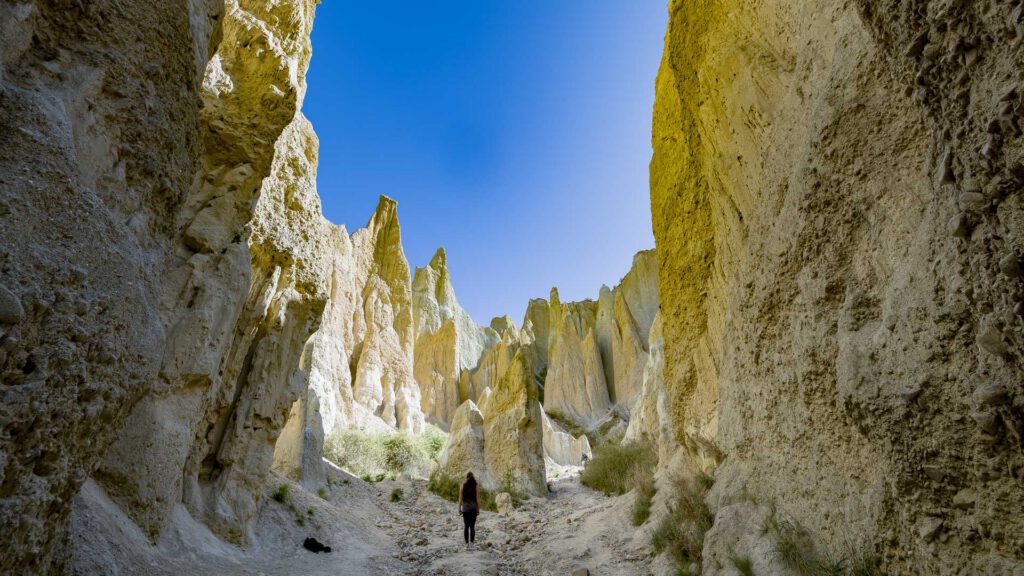
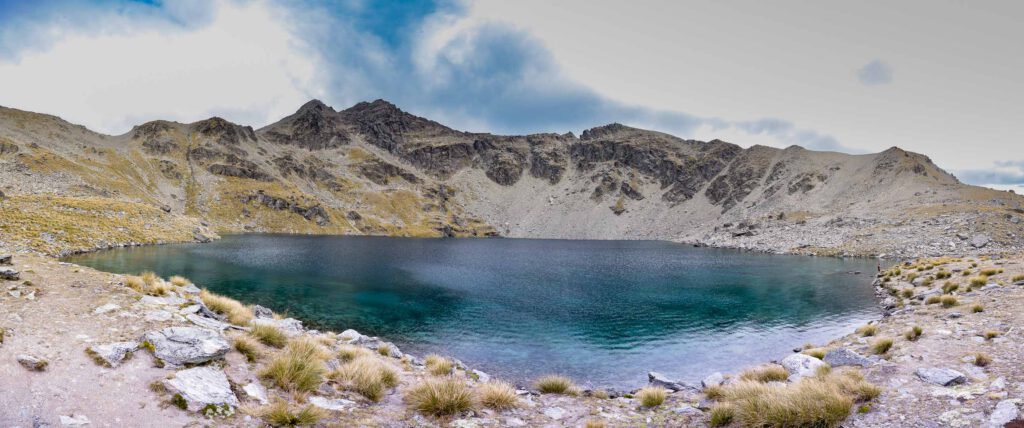
Not because they are dramatic — although they are — but because scale distorts your senses; distance, weather, and time. Mountains rise directly out of the ocean. Glacial rivers and impossible blues. Roads disappear into valleys that look untouched for centuries.
Most days began before sunrise.
Coffee in silence.
Packed snacks.
First to climb.
The cold air and empty roads.
We moved slowly as we did our lap around the South Island.
Queenstown.
Tekapo.
Kaikōura.
Marlborough.
The West Coast.
Milford Sound.
Not chasing landmarks so much as morning hikes, morning swims and morning surfs.
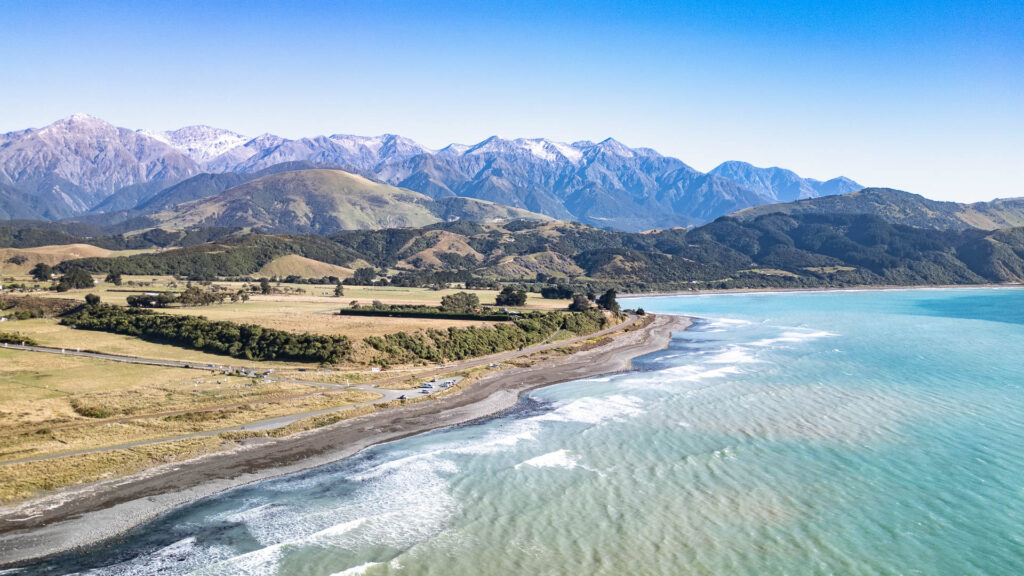
Some places felt enormous in obvious ways — Milford Sound, the Southern Alps, the endless coastline outside Kaikōura — but the moments that stayed longest were usually quieter, or darker.
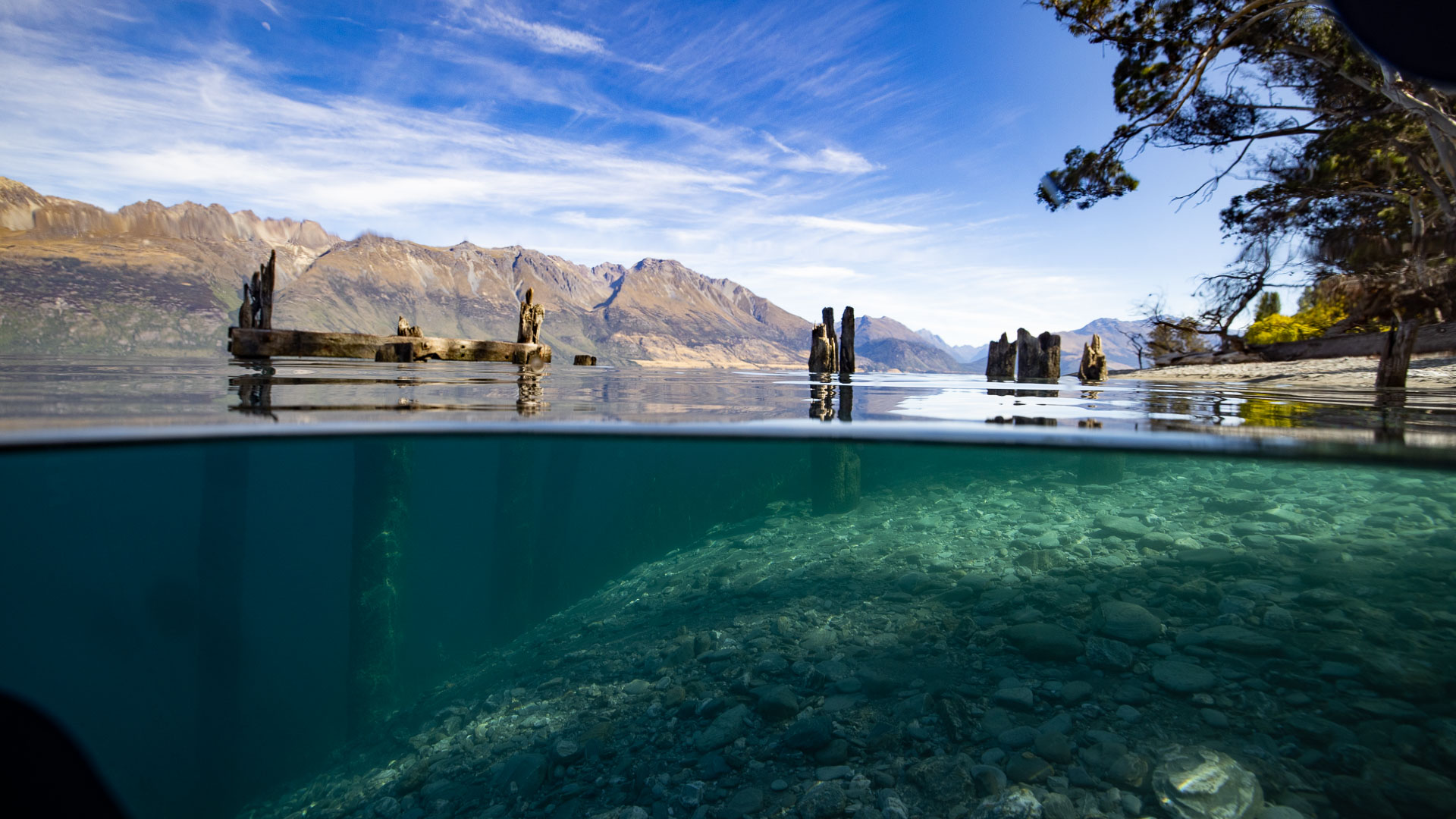
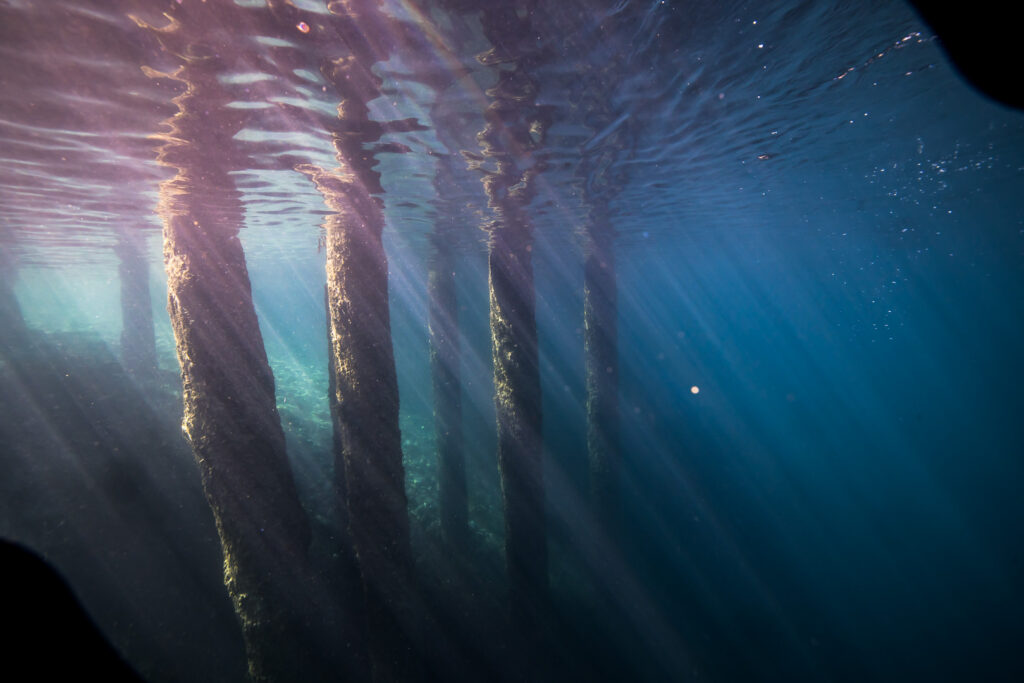
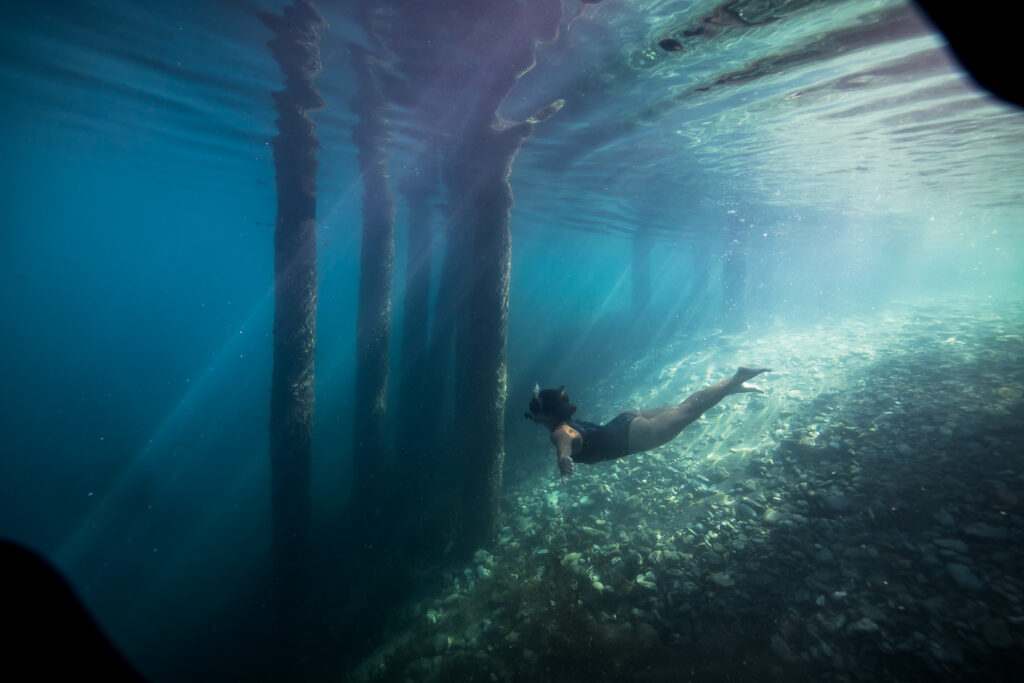
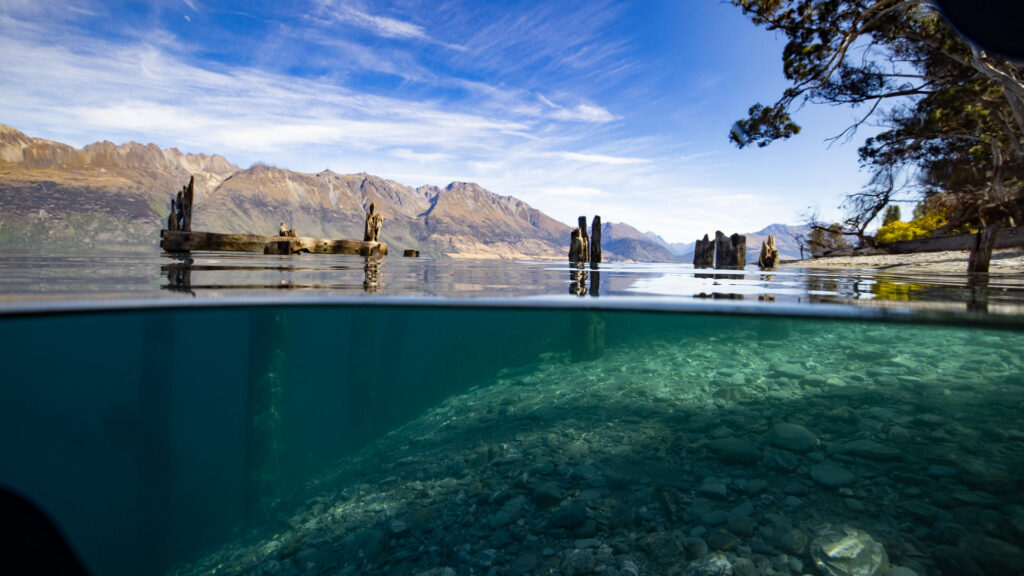
Queenstown, Paradise Wharf
The sun was finally out after a long hike and the lake looked too inviting to ignore. We left everything in the car and walked down toward the old jetty.
As soon as I dropped beneath the surface I knew this place was different.
The shards of sunlight, the old timber pylons, the rapid descent into darkness beneath the lake. No salt, no swell, no ocean noise — just silence.
It felt ethereal.
I’d recently heard stories from the late 1800s about the area and suddenly those old timbers felt alive with history. It’s a dive I’ll remember forever.
Twizel
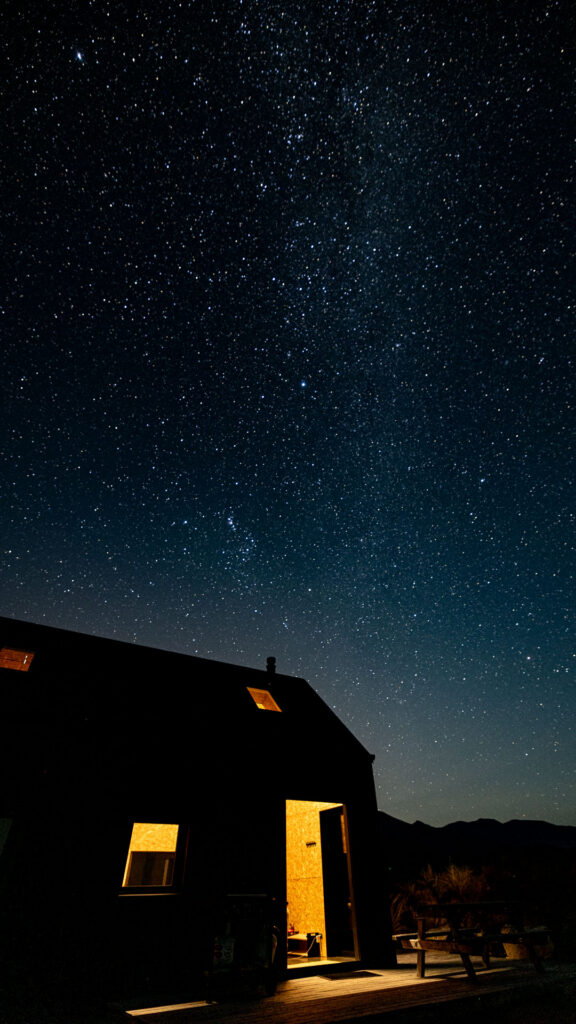
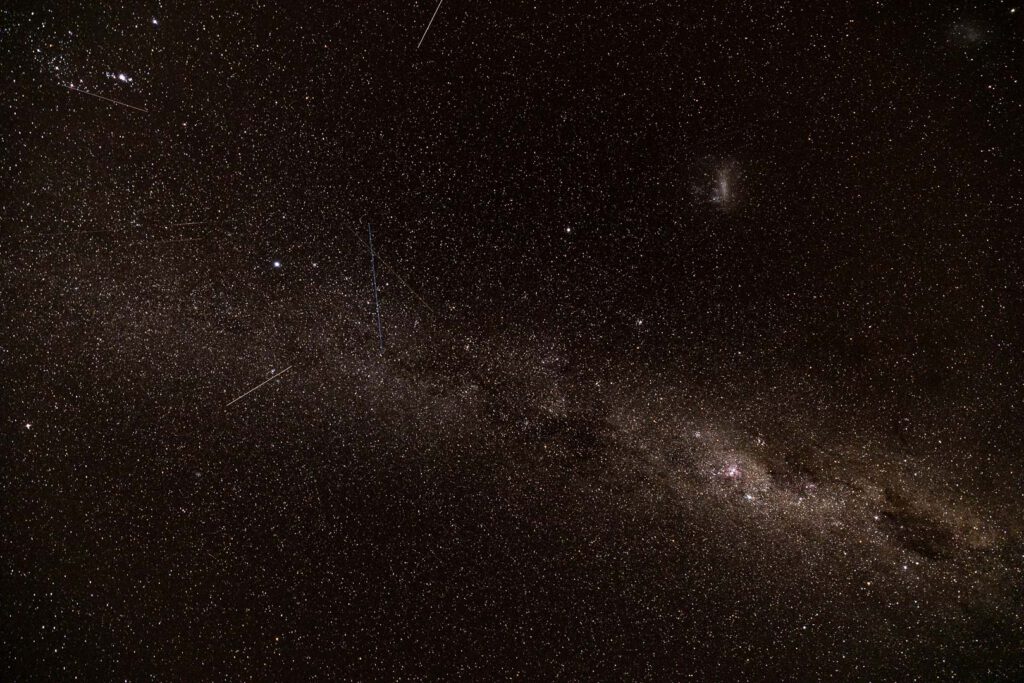
In astronomy, a “dark sky” refers to a place with almost no artificial light pollution.
Twizel felt like exactly that.
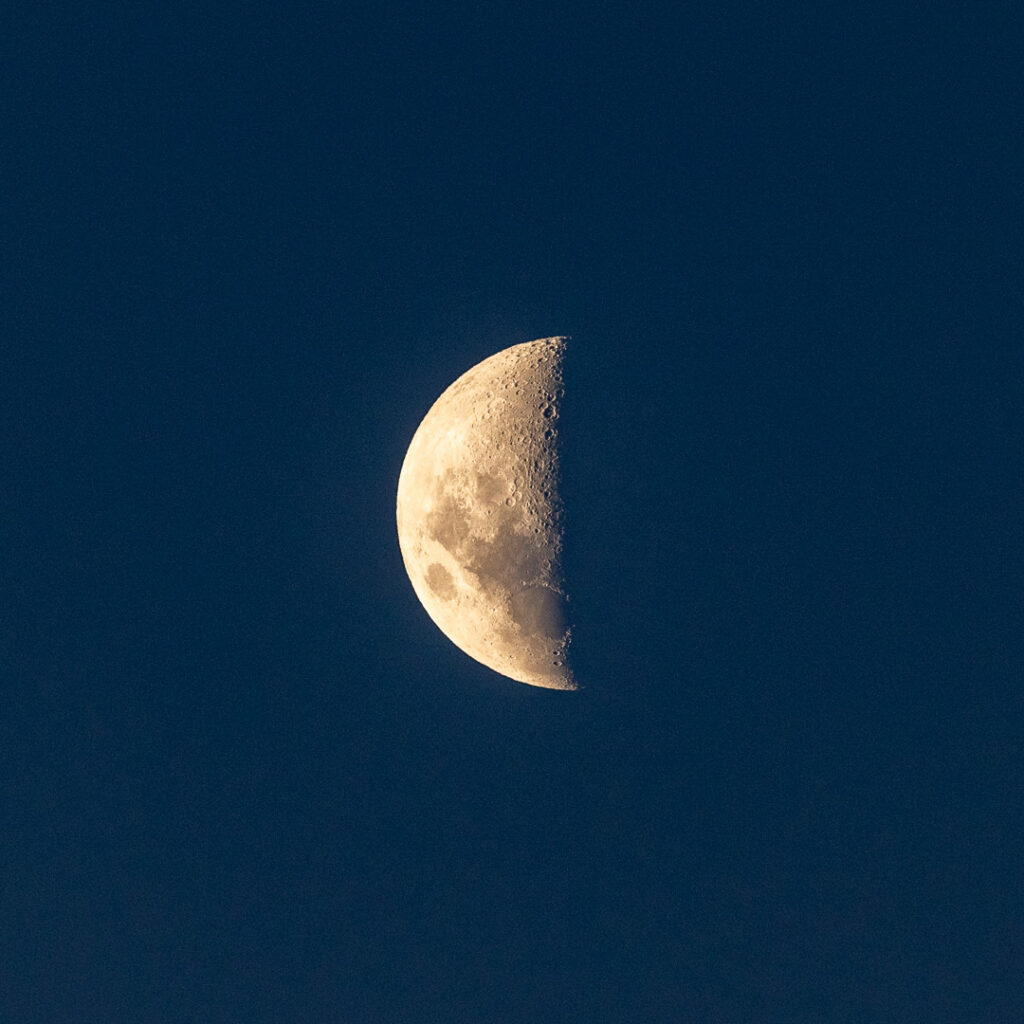
The Milky Way stretched clearly across the sky while shooting stars appeared almost constantly overhead. We spent hours outside on the deck of the Airbnb with binoculars, camera on tripod and a decent jacket to stay warm in the cold alpine air.
I’ve never seen the night sky so clearly.
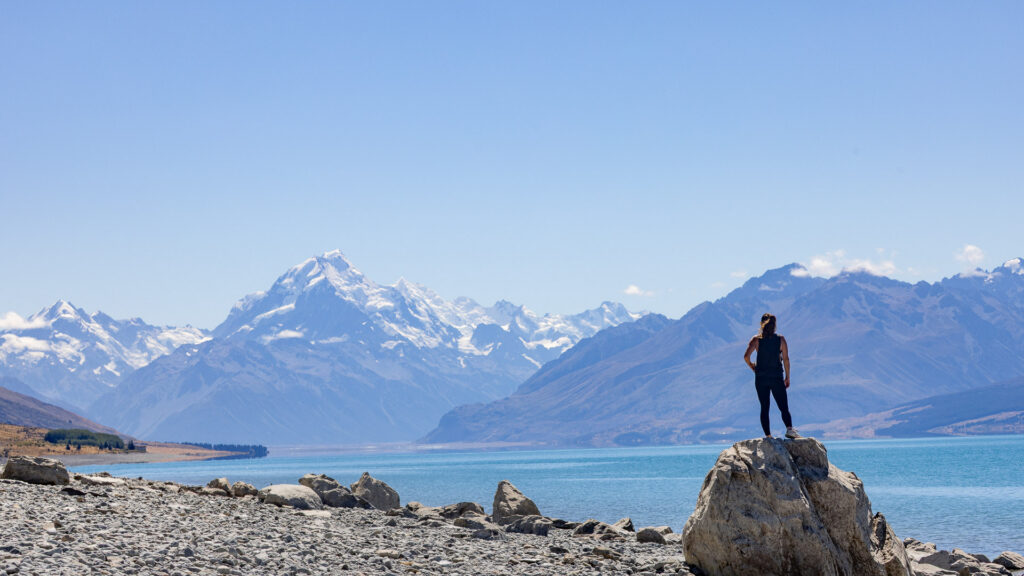
Lake Pukaki
After a long hike, the swim felt necessary.
The midday sun was high by then and the glacial water looked artificially coloured, like someone had pushed saturation far too hard. Standing on the shoreline with snow still visible in the distance, we sat quietly reflecting on the hike we’d just finished.
Simple pleasures.
Hike. Swim. Repeat.
Often the best rewards are free.
Kaikōura
I’d had Kaikōura on my list for years and could easily spend months there.
We lucked into good weather, clean surf and calm enough conditions to get in the water. Mangamaunu had lived in my head for years through recurring dreams and somehow arriving there felt strangely familiar.
The whole town moved at a slower pace.
Good food, good wine, good people — the kind of place that reminds you why travelling matters in the first place.
Marlborough Sounds and Abel Tasman Park
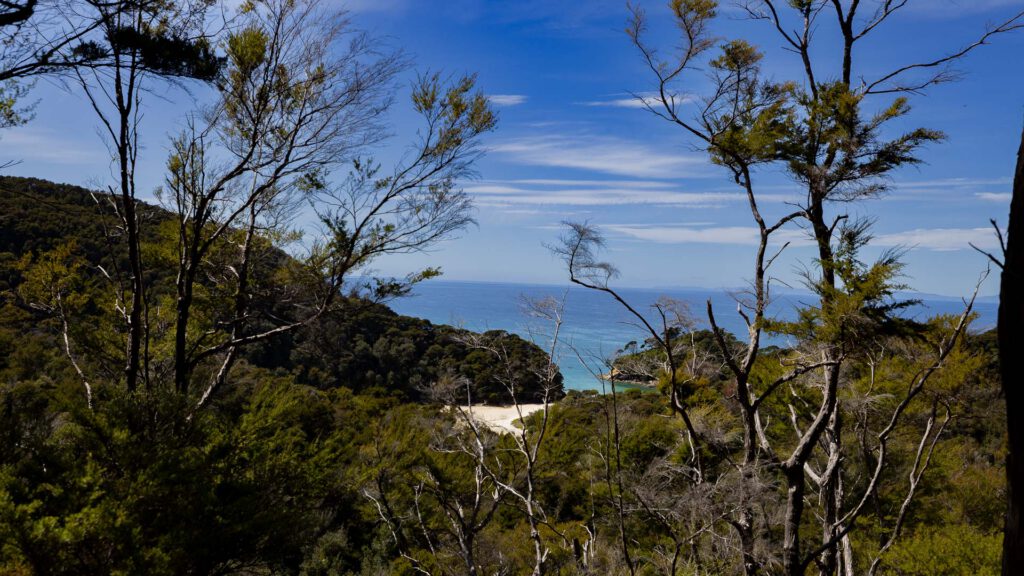
As we left Kaikōura and travelled further north, the weather somehow kept improving.
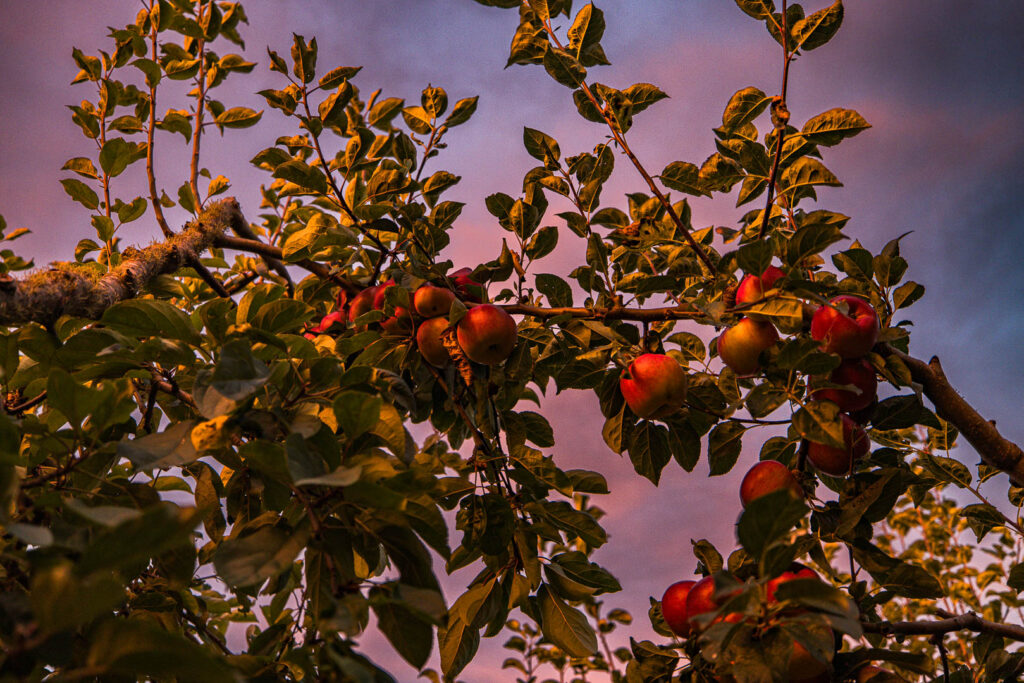
We stayed in places that made me want a simpler life somewhere rural. Small orchards filled with apples and pears, fruit picked straight from the tree, snacks for the next few days sorted simply by walking through the garden.
Again, simple joys.
West Coast – Cape Foulwind
Cape Foulwind wasn’t part of the original plan.
A cancellation forced a pivot and somehow it became one of the highlights of the trip.
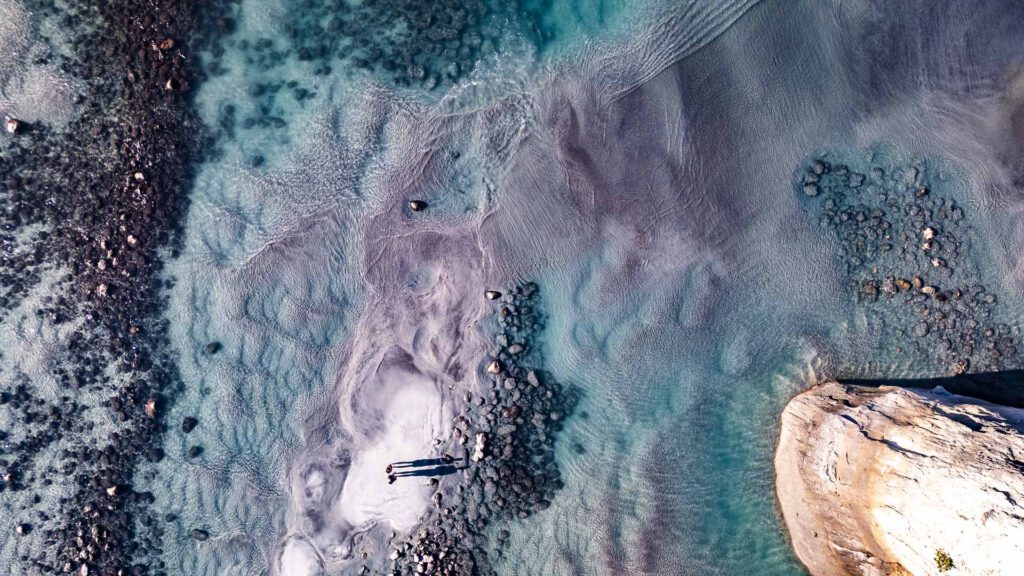
The beaches felt empty. Cliff faces glowed warm beneath the setting sun while crystal clear water moved through the shallows below. Everywhere you looked there were textures, patterns and shifting colour in the landscape.
Heading further down the West Coast everything changed again.
The roads narrowed.
Rainforests thickened.
The Tasman Sea returned beside us.
Weather moved constantly across the ranges. Light would appear for minutes at a time before disappearing behind clouds again. We were incredibly fortunate with the long drive day being overcast, our FOMO was low in these conditions.
Milford Sound
Even the busiest places somehow still felt quiet.
Milford Sound was the clearest example of that.
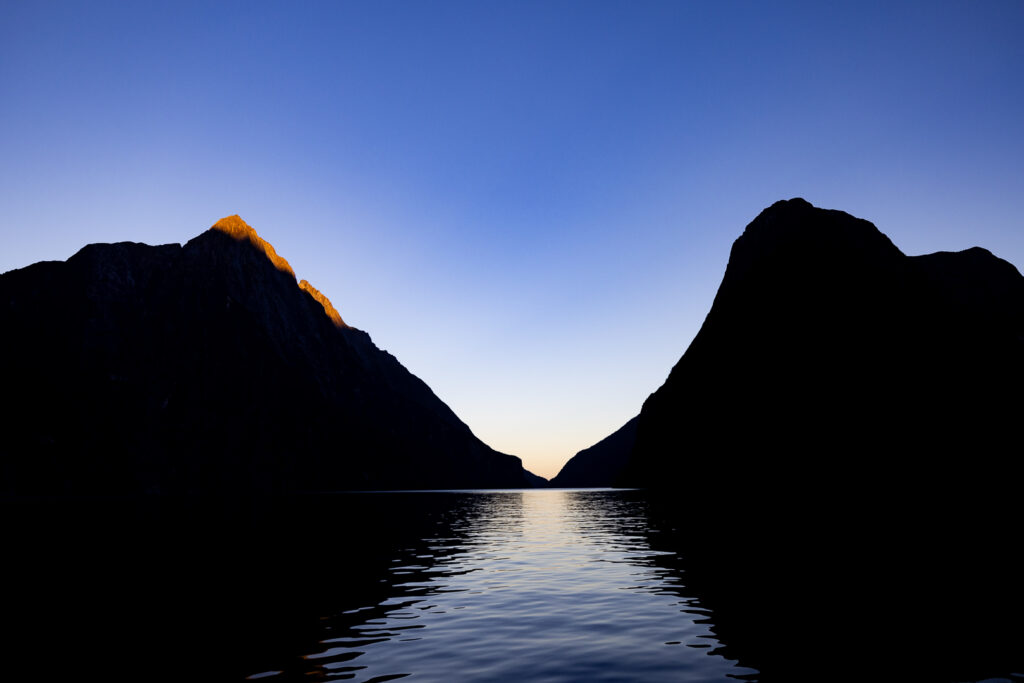
A handful of Tour boats moved beneath cliffs that looked impossibly vertical, but the overwhelming feeling wasn’t tourism or activity — it was scale. The kind that makes human movement feel temporary.
We stayed overnight after most people had already left.
The night sky returned first, then eventually sunrise as light slowly found its way into the fiord through cracks in the surrounding mountains.
By the final days, the drives themselves had become part of the experience.
New Zealand has a way of making movement feel cinematic. Every road leads somewhere — usually toward changing weather, water, mountains, or the wildness that seems to exist around every corner of the South Island.